The short version
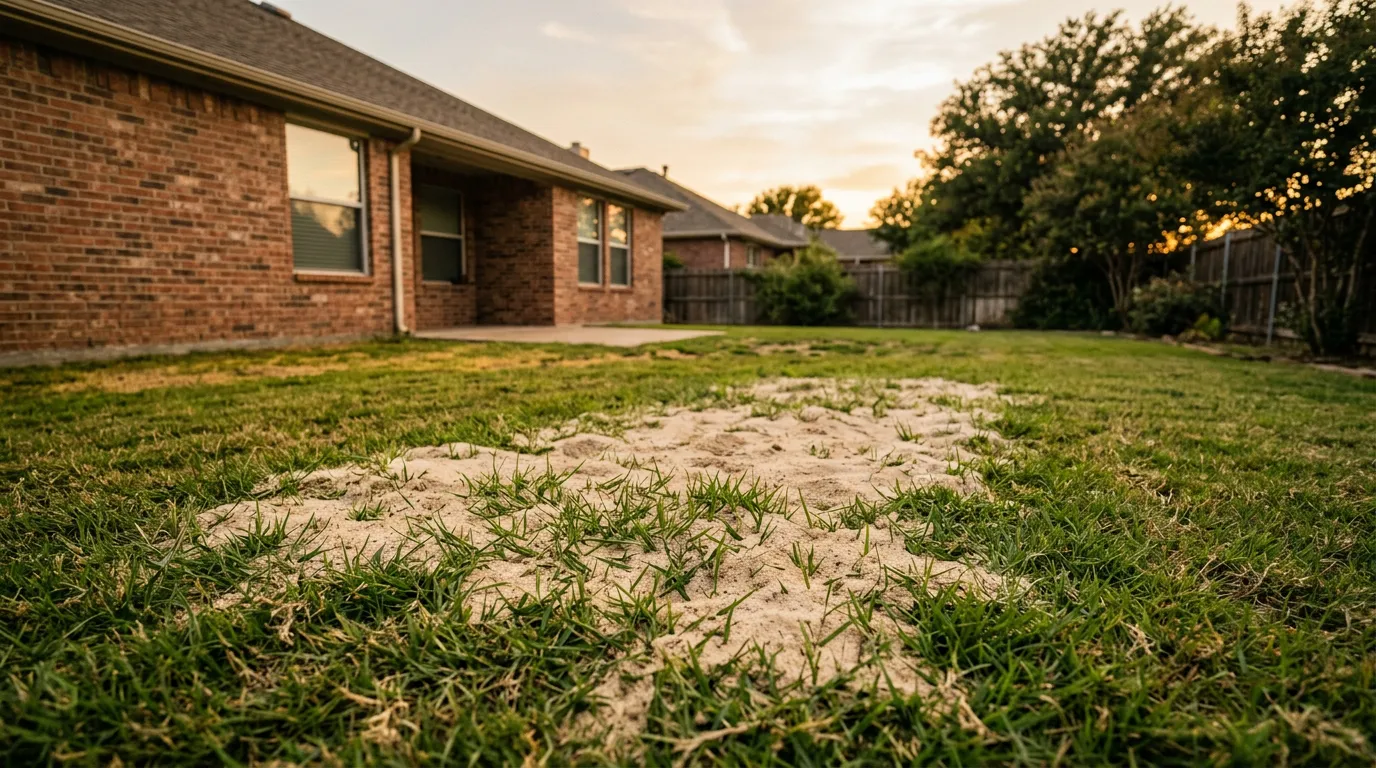
To level a lawn, use Sandy Soil Mix or USGA Sand, spread thin, about 1/4" at a time, so the grass blades still show. That fixes shallow dips under about an inch. Anything deeper, fill it with soil and lay new sod on top. Bermuda handles sand topdressing better than St. Augustine, so go lighter on St. Aug.
Which sand or soil is for what
We sell a lot of sand and dirt that looks alike in a pile. They do very different jobs. Prices are as of October 2026; click through for the live price.
| Material | What it's for | Lawn? | Sold by | Price |
|---|---|---|---|---|
| USGA Sand | Topdressing, drainage, bunkers | Yes, best for Bermuda | ton | $68 |
| Sandy Soil Mix | Leveling and topdressing lawns | Yes, our default | yard | $44 |
| Premium Soil Mix | Sod prep, filling bare spots, beds | Under new sod | yard | $54 |
| Fill Dirt | Unscreened grade work, deep holes | Only as the bottom layer | yard | $21 |
| Masonry Sand | Mortar and brick work | No | ton | $42 |
| Paver Leveling Sand | The 1" bedding layer under pavers | No | ton | $68 |
| White Play Sand | Sandboxes, bright landscape use | No | yard | $180 |
A few notes from the counter:
- USGA sand is built to drain. It's the sand golf courses use on greens. It won't magically fix clay a foot down, but a thin layer helps the surface dry out and evens the lawn.
- Sandy Soil Mix is a sand-heavy blend with some soil in it. It levels like sand but gives roots a little more to grab. If you're not sure, this is what we'd put on most yards.
- Premium Soil Mix is screened topsoil with organic matter. It's what you want under new sod, not spread on top of grass that's already growing.
- Fill dirt is cheap and unscreened. It's great for filling a big hole or building up grade, but put a few inches of good soil on top before you sod.
- Masonry and paver sand are for hardscape. For paver joints, that's polymeric sand, a whole different product.
Leveling low spots vs topdressing
These get mixed up a lot.
Topdressing is a thin layer over the whole lawn, or a big section of it. You're smoothing out bumps and improving the surface. Keep it to about 1/4". Rake or drag it in so the blades stick up through it.
Leveling low spots means filling dips. Here's what we tell people:
- Under about 1/2" deep: fill it with sand or Sandy Soil Mix, rake it smooth, water it in. Done.
- About 1/2" to 1" deep: fill it in two or three passes. Put down about 1/4" to 1/2", let the grass grow up through it, then go again a few weeks later.
- Deeper than about 1": don't try to bury the grass. It'll smother. Cut out the sod, fill underneath with Premium Soil Mix (or fill dirt topped with Premium Soil Mix), tamp it, and lay the sod back down. For small spots you're replacing, we sell Tifway 419 Bermuda by the square yard so you don't have to buy a whole pallet.
The biggest mistake we see is someone dumping 2 inches of sand on a lawn and wondering why it turned brown. Grass needs to see sunlight. Thin layers, more than once, beats one thick layer every time.
Bermuda vs St. Augustine vs Zoysia
Bermuda spreads by runners above and below ground, and it grows up through sand pretty well. It's the grass topdressing is usually done on. Do it when it's actively growing in late spring and summer, after you've been mowing regularly. Mow it a little low first so the sand gets down to the soil.
St. Augustine has thick runners and wide blades that are easier to smother. Go lighter, keep it well under 1/4" in one pass, and many people use Sandy Soil Mix rather than straight sand. Make sure no runners end up buried.
Zoysia is slow to recover, so treat it like St. Augustine: thin layers, patience.
Don't topdress dormant brown grass in winter. It can't grow up through anything until it greens up.
How much do I need?
The formula is the same one in our topsoil guide: sq ft times inches deep, divided by 324, equals cubic yards.
Per 1,000 sq ft of lawn:
| Depth | Cubic yards | USGA Sand (tons, estimate) |
|---|---|---|
| 1/4" | 0.8 cu yd | about 1 ton |
| 1/2" | 1.5 cu yd | about 2 tons |
| 1" | 3.1 cu yd | about 4 to 4.5 tons |
USGA sand is sold by the ton, so we've converted it at roughly 1.3 to 1.4 tons per cubic yard. That's an estimate. Damp sand weighs more, so round up. Sandy Soil Mix and Premium Soil Mix are sold by the yard, so use the cubic yard column for those.
Worked example: a 3,000 sq ft backyard topdressed at 1/4" is 3 times 0.8, so about 2.5 cubic yards of Sandy Soil Mix, or about 3 tons of USGA sand.
What to do next
Measure the lawn with our satellite measuring tool, then run the numbers in the soil calculator. Browse everything on the soil and compost page.
We're delivery only. In-stock soil and sand ordered by 10 AM can go out the same day across south DFW, and you can check your ZIP with the delivery checker. Have a spot picked out where the truck can dump close to the lawn, like the driveway with a tarp down. Questions? Call 817-765-1655.
Also useful
- How much topsoil for a raised bed or yard: the full soil math
- Best sod for sun or shade in North Texas: if you end up resodding the bad spots
- How much is a pallet of sod: pallet coverage and pricing