What you need rock for
Rock and gravel are the unglamorous, infrastructure-grade end of landscape supply. You don't notice it when it's working. When it's missing — when the path turns to mud, the driveway pots up, the French drain backs up — you notice fast.
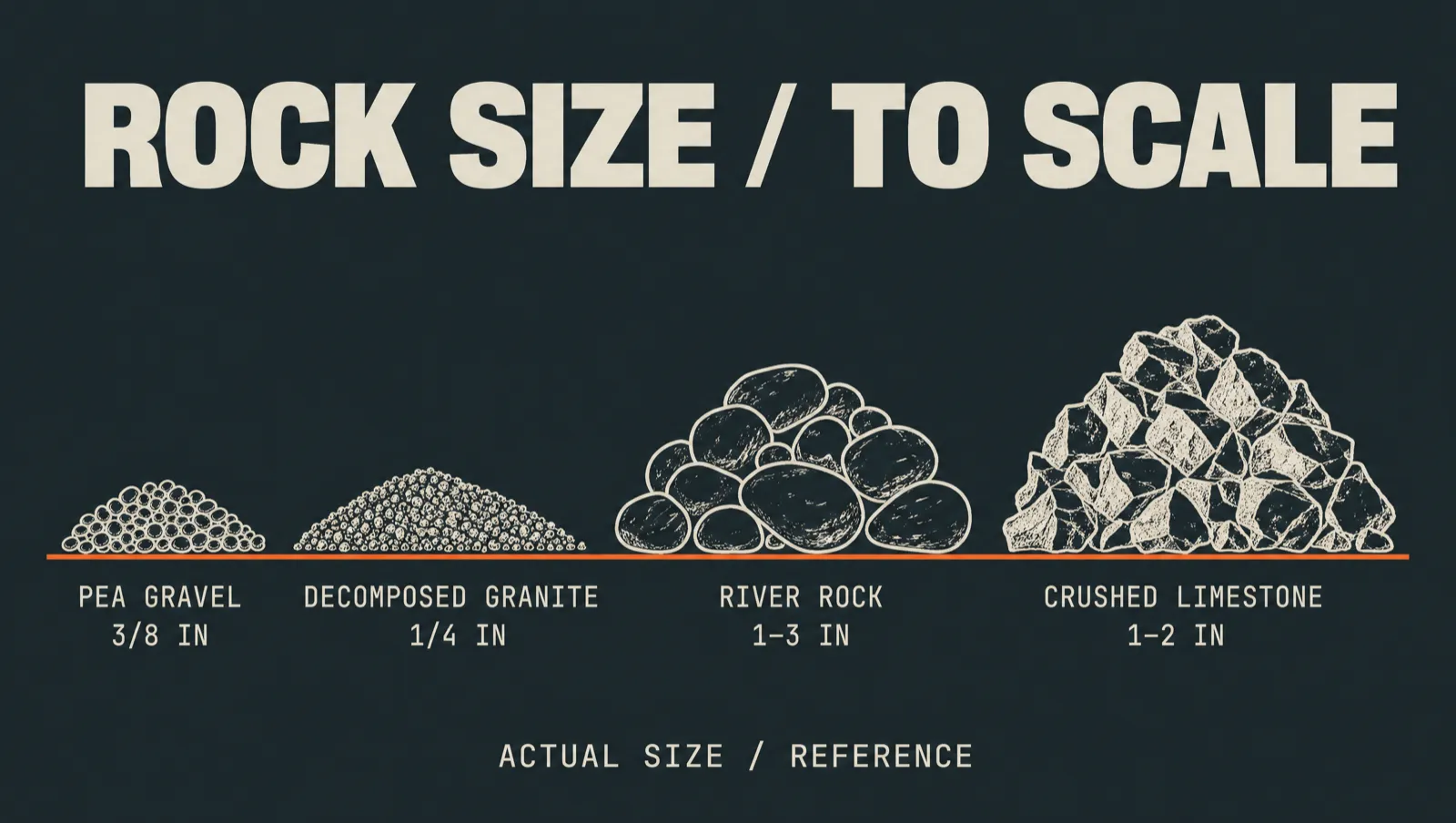
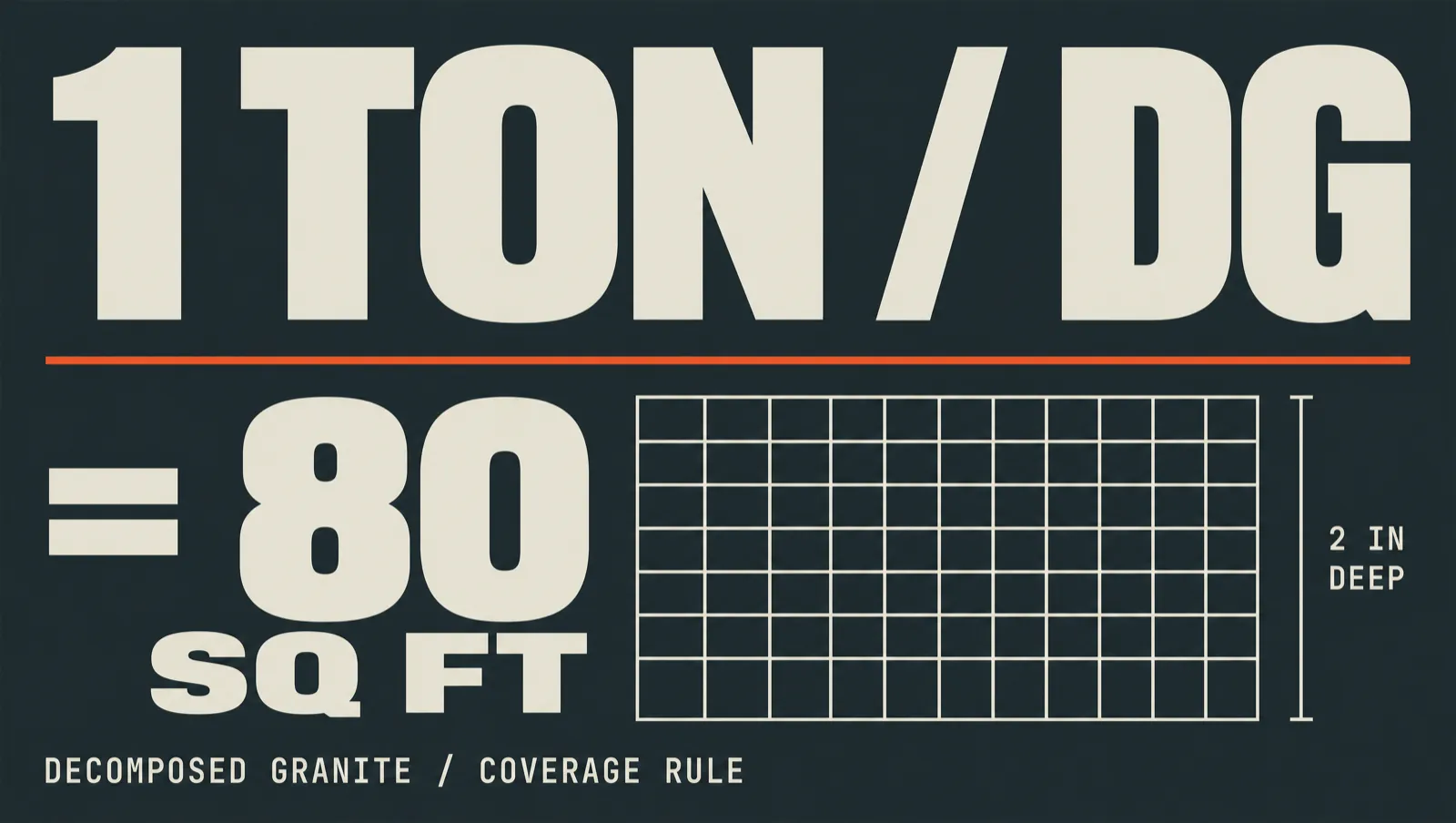
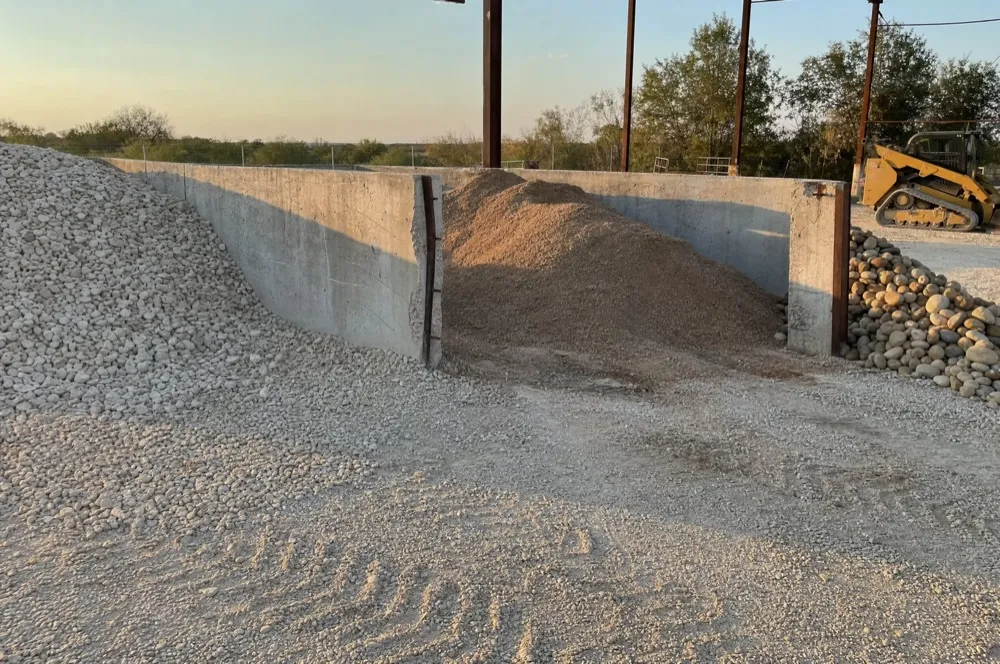
We sell rock by the ton. One ton of decomposed granite covers about 80 sq ft at 2 inches deep. One ton of crushed limestone covers about 70 sq ft at 2 inches deep. River rock covers less because it's bigger and rounder — about 80-100 sq ft at 3 inches deep for the 1-3" sizes.
Which rock for which job
Driveway base — Crushed Limestone, Utility Rock
1-inch crushed limestone is the standard DFW driveway material. It compacts to a hard surface, drains well, and you can re-grade a soft spot with a fresh ton anytime. Utility Rock (3/4") is the same idea, slightly larger, slightly cheaper, used as a base under a finish course. Plan for 6 inches of compacted base for a vehicle driveway — that's about a ton per 70 sq ft. Sizing a full driveway from scratch, base course and all? See How to size a gravel driveway.
Path / patio surface — Decomposed Granite, Texas Blush
Decomposed Granite (DG) is fine-crushed granite that packs to a firm, walkable surface but stays porous. Tan color, the texture you see at every public park in central Texas. Texas Blush is the pink-red equivalent — same material, different mine, more decorative. Both compact firm if you wet and tamp; don't use them where they'll get rutted by tires unless you build a 4" compacted base under them.
Drainage — Lateral Rock, Drain Rock
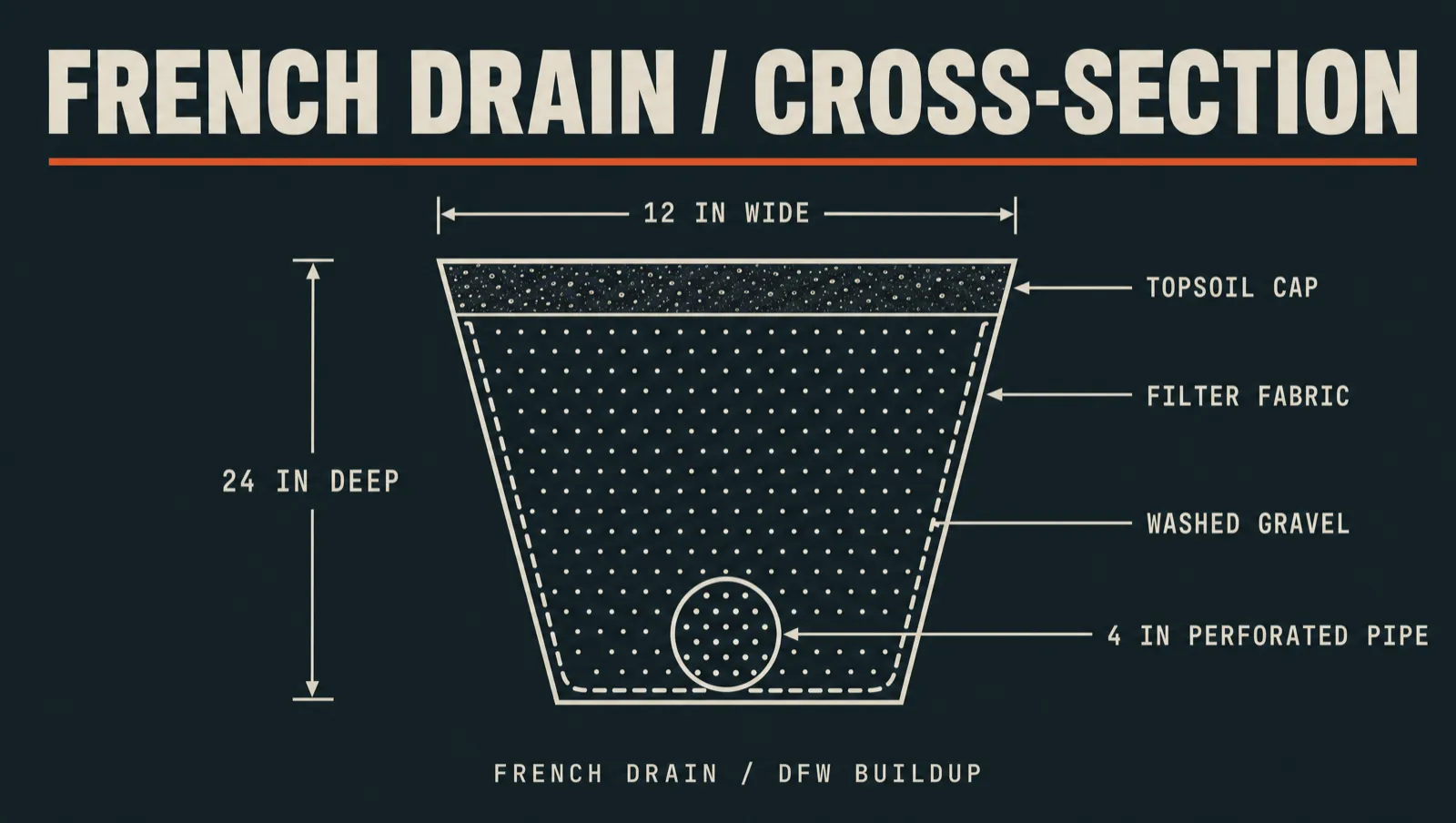
For French drains, downspout runs, and any "water is sitting where it shouldn't" project. Larger and angular so it doesn't pack tight — water moves through the voids. Wrap the rock and pipe in filter fabric so dirt doesn't migrate in and clog the rock. Building one? How to size a French drain has the rock tonnage, pipe, and fabric math by linear foot.
Decorative — River Rock (Sabine, Brazos), Texas Country Cobble, Black Star
Round water-tumbled stone. Beds without plants in them, dry creek beds, accent areas, around pool equipment. Sized 1-3" for the small-river-stone look, 2-4" or 4-8" for a bolder dry-creek-bed feel. Sabine has a wider color mix; Brazos is browner and more uniform. Texas Country Cobble is a larger specimen-grade rock — sold by the ton but most landscapes only need a few of them as feature stones.
Specialty — Infield Clay, Masonry Sand, USGA Sand
Infield clay for baseball/softball mixes. Masonry sand for mortar and brick work. USGA sand for bunkers and turf top-dressing — finer and more uniform than masonry sand.
How much rock do I need
| Project | Depth | Coverage |
|---|---|---|
| Path stone (DG) | 2" | ~80 sq ft / ton |
| Pea gravel path | 2" | ~100 sq ft / ton |
| River rock bed | 3" | ~80 sq ft / ton |
| Crushed limestone driveway base | 6" compacted | ~25 sq ft / ton |
| French-drain trench fill | 18" deep × 12" wide | ~9 LF / ton |
Full tonnage formula and the coverage chart for every rock type: How much rock or gravel do I need?.
Use the path calculator below for walkways — it computes the DG surface, the limestone base course, the steel edging, and the weed barrier all at once.
Contractor notes
Per-ton volume pricing kicks in at the 5-ton mark and steps again at 20 tons. Tandem-load drops (16-22 tons) are standard for driveway and base jobs; same-day pickup if you arrive before noon. For French-drain installs, ask for the bundle quote — drain rock + perforated pipe + filter fabric pre-priced at contractor terms saves a billing line.