The short version
A residential gravel driveway in DFW needs 6 inches of crushed limestone base, compacted, plus a 2-inch top coat of decorative or finer gravel. That works out to roughly 1 ton of material per 25 sq ft of driveway. A 12 × 60 ft driveway (720 sq ft) takes about 28-30 tons total.
The math
Driveways are different from paths and patios for one reason: cars. Cars are heavy, they steer, and they rut. The base under a driveway has to be deep enough that the wheel load spreads out before it reaches the soft clay below. Six inches compacted is the residential minimum. Eight inches if you're parking trucks or trailers.
Worked example. You've got a straight driveway, 12 ft wide × 60 ft long = 720 sq ft.
Layer 1: Base (6" compacted crushed limestone or "road base")
720 sq ft × 6 in ÷ 324 = 13.3 cu yd of base
1" crushed limestone weighs ~1.5 tons per cu yd, so that's about 20 tons of base. On a tighter budget, a 4" course of 3/4" utility rock topped with 2" of 1" crushed limestone does the same structural job. Order 22 to allow for compaction loss — the rule of thumb is 15-20% volume loss when you tamp it.
Layer 2: Top coat (2" of decorative or 3/8" pea gravel)
720 sq ft × 2 in ÷ 324 = 4.4 cu yd, or about 6 tons of top
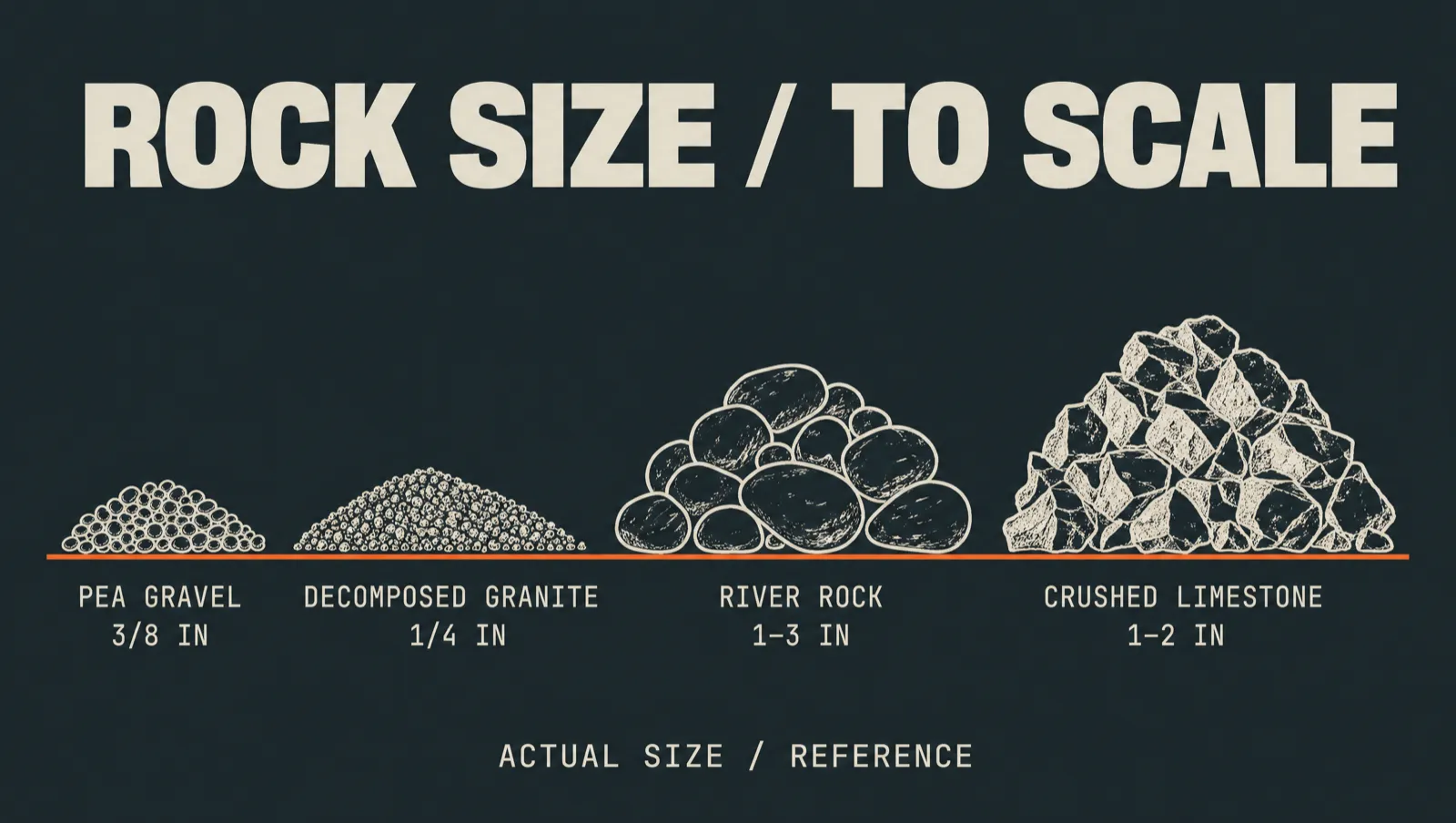
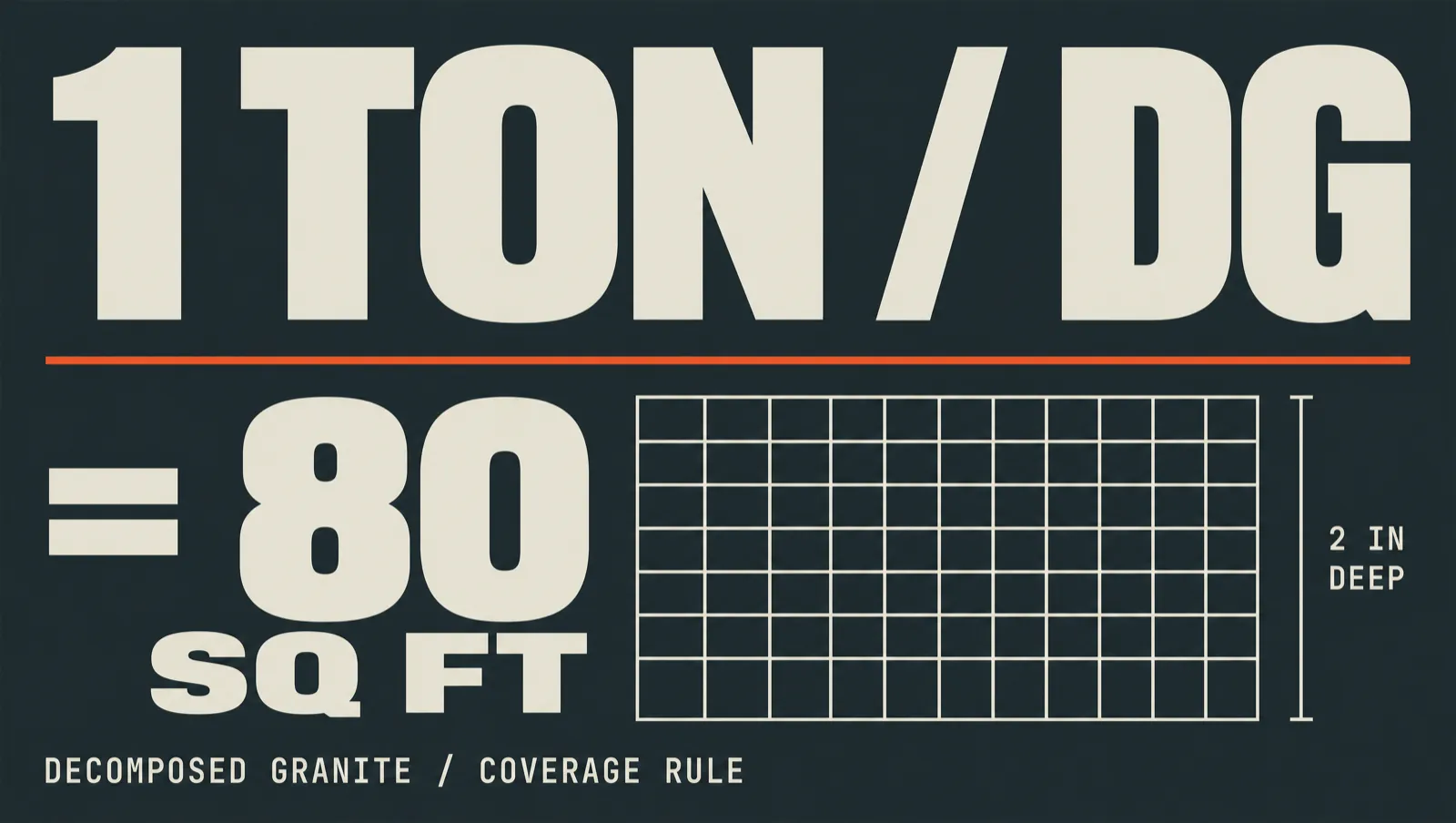
For the top coat, decomposed granite or more 1" crushed limestone packs tight. Pea gravel only works as a thin decorative layer over a locked base (see the mistakes below).
So a 720 sq ft driveway = ~28 tons total. At single-axle (10 ton) or tandem (16-22 ton) delivery, this is a 2-truck job most of the time.
Driveway width cheat sheet:
- 10 ft — single car only, no room to walk past
- 12 ft — standard single, comfortable
- 14 ft — single with a sidewalk strip or a wider turn
- 20-24 ft — double car
Length — measure from where the driveway meets the street (or curb cut) to where it ends at the garage or parking pad. Add 4 ft for a flare at the street if your driveway angles into the road; you'll want gravel under the wheels at the turn.
Curves and parking pads — add the curve area as a wedge (≈ 1/4 of the full circle the curve would make), and parking pads as their own rectangle.
Common mistakes
- Skipping the base, just dumping rock. A 2" layer of pretty river rock on bare DFW clay is going to rut, spread, and disappear into the soil within a season. Without 6 inches of compacted crushed base, you don't have a driveway — you have a slow gravel theft.
- Not laying fabric. Heavy woven fabric between the soil and the base layer keeps clay from migrating up into the rock. For driveway widths, the 6' × 300' contractor roll (1,800 sq ft) means fewer seams. It is one of the cheapest layers in the build and one of the biggest reasons a gravel driveway lasts.
- Using pea gravel as the only layer. Pea gravel doesn't lock. Tires spin it out, the postman's truck pushes it into a berm. Use crushed limestone (which has fines that pack) as the base, then pea gravel only as a thin decorative top if you want the look.
- Forgetting drainage and edging. A gravel driveway needs a slight crown (1-2% slope to the edges) so water sheets off instead of running down the middle. Without edging (steel edging, a concrete curb, or large stone), gravel will spread sideways into your lawn.
What to do next
Driveways usually need a delivery quote because of the tonnage and the truck access — request a driveway quote and we'll spec the base, top coat, fabric, and dump truck routing for your address. For DIY-able shorter driveways or aprons, the driveway wizard on the rock & gravel page sizes both layers and lets you order direct. To browse base material and decorative top coat options, see rock & gravel stock and the rock & gravel materials page for an overview of crushed limestone vs decomposed granite vs river rock.
Also useful
- How much rock or gravel do I need — the tonnage math behind these layers
- How to size a French drain — for driveways that don't drain naturally