The short version
Most decorative rock and gravel is sold by the ton. One ton covers about 100 square feet at 2 inches deep for 3/4" rock or smaller. For paths and beds, that's the number to start with. Bigger rock and deeper layers eat tonnage faster.
The math
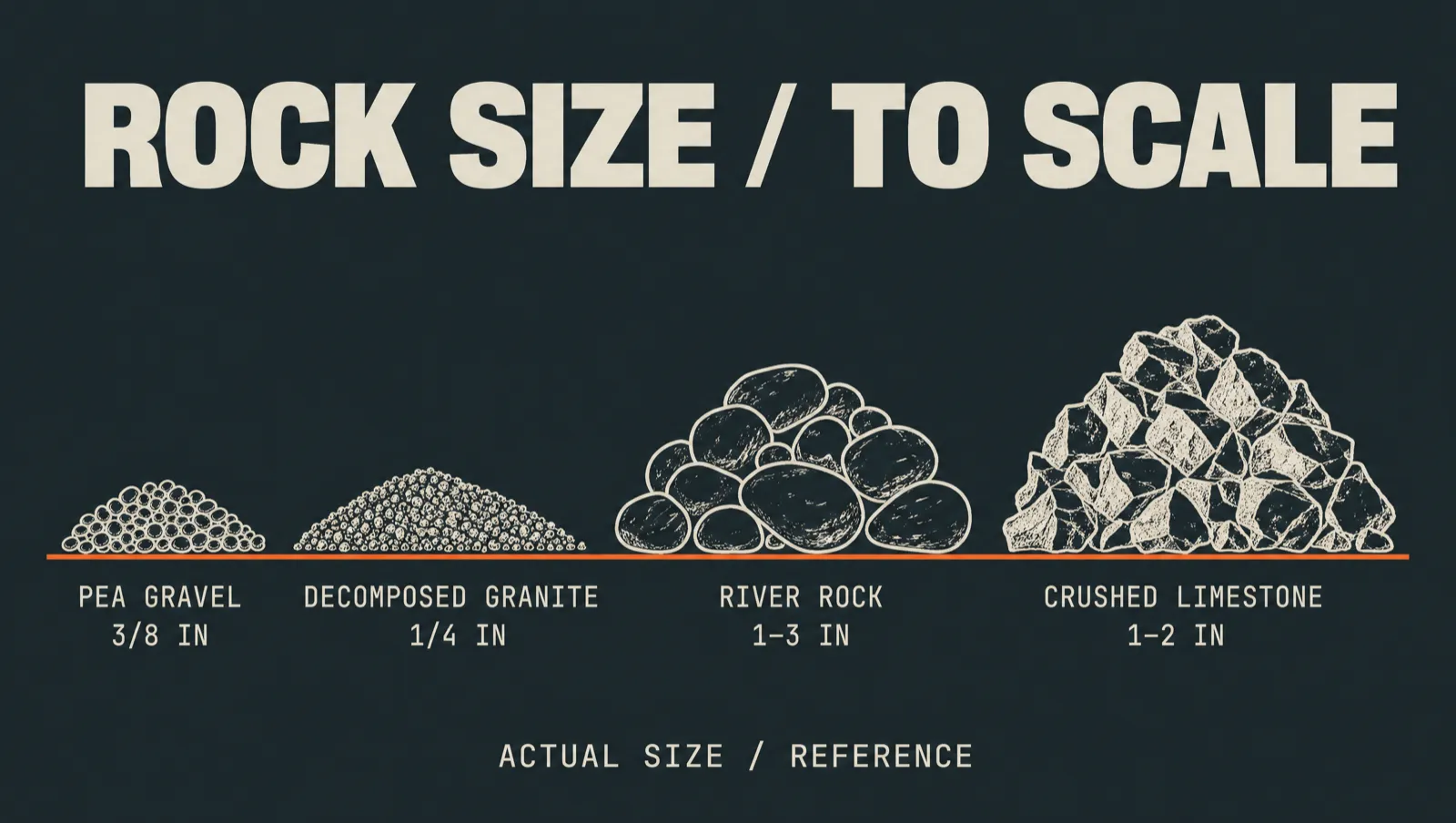
The coverage shifts based on rock size and depth, but here's the working chart for DFW landscape rock:
| Material | Coverage at 2" deep | Coverage at 3" deep |
|---|---|---|
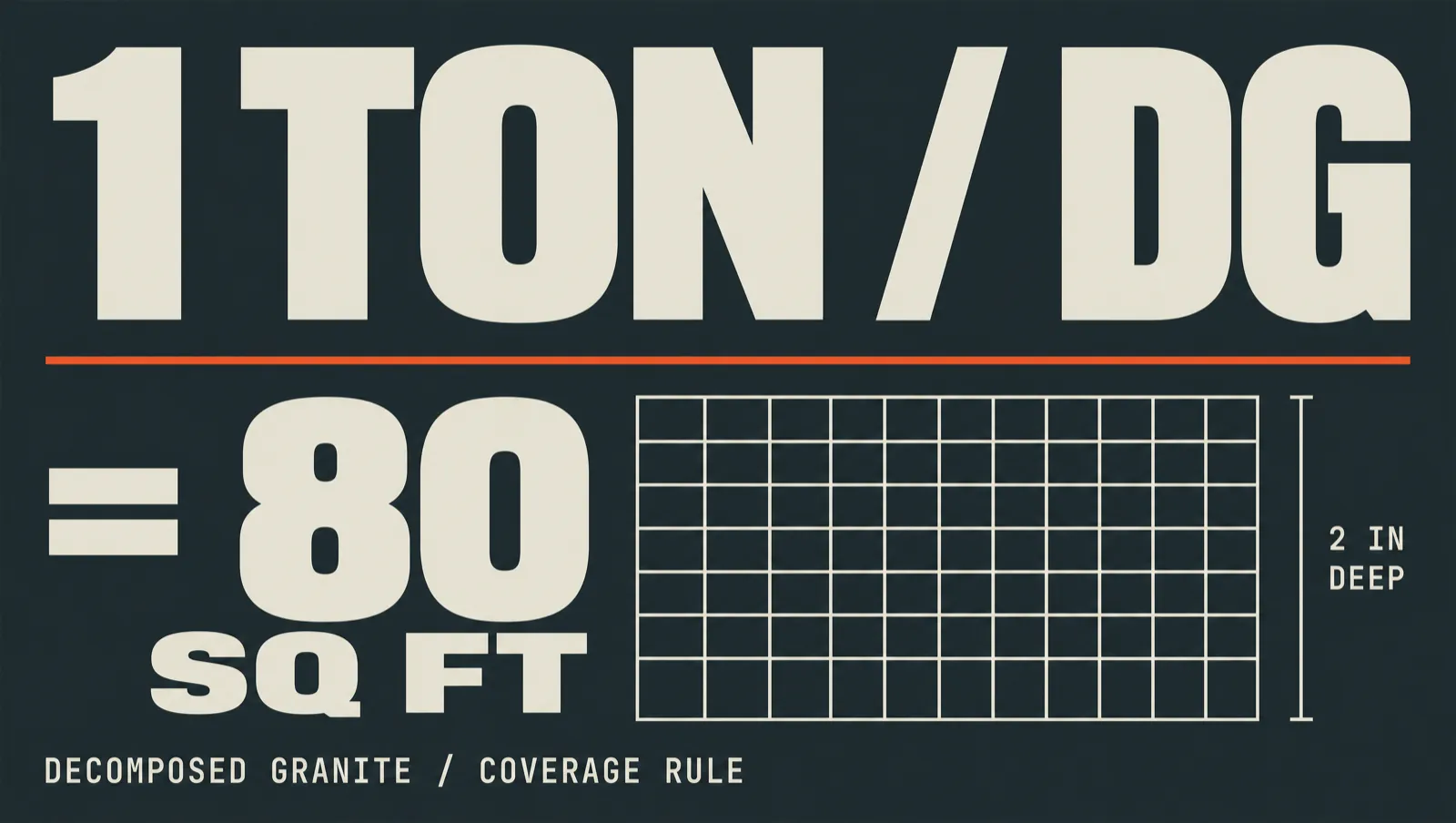
| Decomposed granite (DG, screened) | ~80 sq ft / ton | ~55 sq ft / ton |
| 3/8" pea gravel | ~100 sq ft / ton | ~67 sq ft / ton |
| 3/4" river rock | ~100 sq ft / ton | ~67 sq ft / ton |
| 1-3" river rock (e.g. Brazos 1"-3") | ~120 sq ft / ton | ~80 sq ft / ton |
| 2-4" river rock (e.g. Sabine 2"-4") | too shallow, lay it 4" deep | ~60 sq ft / ton at 4" |
| Crushed limestone base | ~110 sq ft / ton | ~73 sq ft / ton |
Conversion if you'd rather think in cubic yards: 1 cu yd ≈ 1.4 tons for most landscape rock. A loose ton of 3/4" rock is about 0.7 cu yd.
Worked example. You're filling a 4 ft × 30 ft dry creek bed with 1-3" river rock at 3" deep. That's 120 sq ft. At about 80 sq ft per ton:
120 ÷ 80 = 1.5 tons → order 2 tons
Same thing in yards: 120 sq ft × 3" ÷ 324 = 1.11 cu yd × 1.35 tons per yard = 1.5 tons. Bigger rock isn't heavier per yard, it just has to go in deeper, so the depth is what changes your order. Our river rock and dry creek bed guide has the bigger sizes.
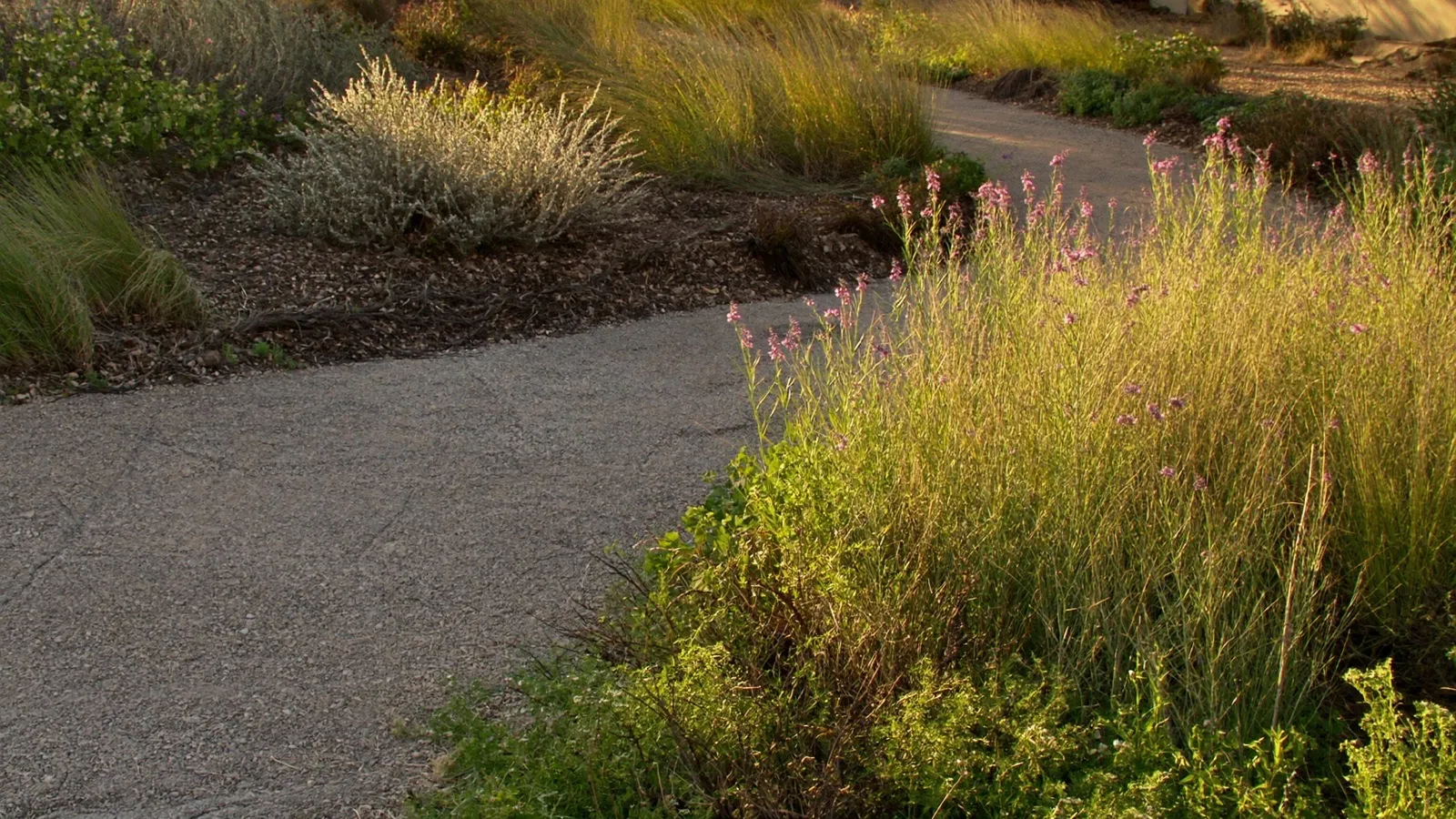
DG paths: 2 inches compacted is the sweet spot. For a 3 ft × 50 ft path = 150 sq ft × 2" = 300 cubic inches per sq ft. At ~80 sq ft per ton compacted, 2 tons. Wet, screed, and tamp it — DG that isn't compacted will rut the first time a wheelbarrow rolls across.
Common mistakes
- Laying big rock too thin. 2" to 4" river rock at 2 inches deep leaves fabric showing between every stone. Lay it about one and a half times as deep as the average stone.
- Skipping landscape fabric under the rock. Bermuda will erupt through 4 inches of pea gravel in one growing season. Heavy woven landscape fabric stapled down first, rock on top.
- Buying river rock for a path you'll walk barefoot. 1-2" river rock looks great around the AC unit; it's miserable to walk on barefoot. For paths, use DG or 3/8" pea gravel.
- Forgetting edging. Rock migrates. Steel edging, brick, or boulders to keep it contained or you'll be raking the driveway forever.
What to do next
The fastest math: rock & gravel calculator — pick the rock size, enter sq ft and depth, get tonnage. To see what's in the yard, shop rock & gravel or read the rock & gravel materials page for a walkthrough on size, color, and base requirements. If you're building a path specifically, the path/dry-creek wizard on that page sizes both the rock and the fabric for you.
Also useful
- How to size a French drain — uses 3/4" washed rock; same per-ton math
- How to size a gravel driveway — same materials, bigger scale, different base