What hardscape buys you
Hardscape is the part of the yard that doesn't change with the seasons. A flagstone patio, a paver walkway, stepping stones across a side yard — installed right, they're still there in 30 years. They also do real work: they keep mud off the back door, they make uneven ground walkable, and they extend the usable square footage of a small lot.
Hardscape is also the part of a landscape project where material choice locks you in. You can swap mulch every spring. You don't pull up a 400-square-foot patio because you changed your mind about color. Spend time on this one.
Which stone for which job
Natural flagstone — patios and walkways
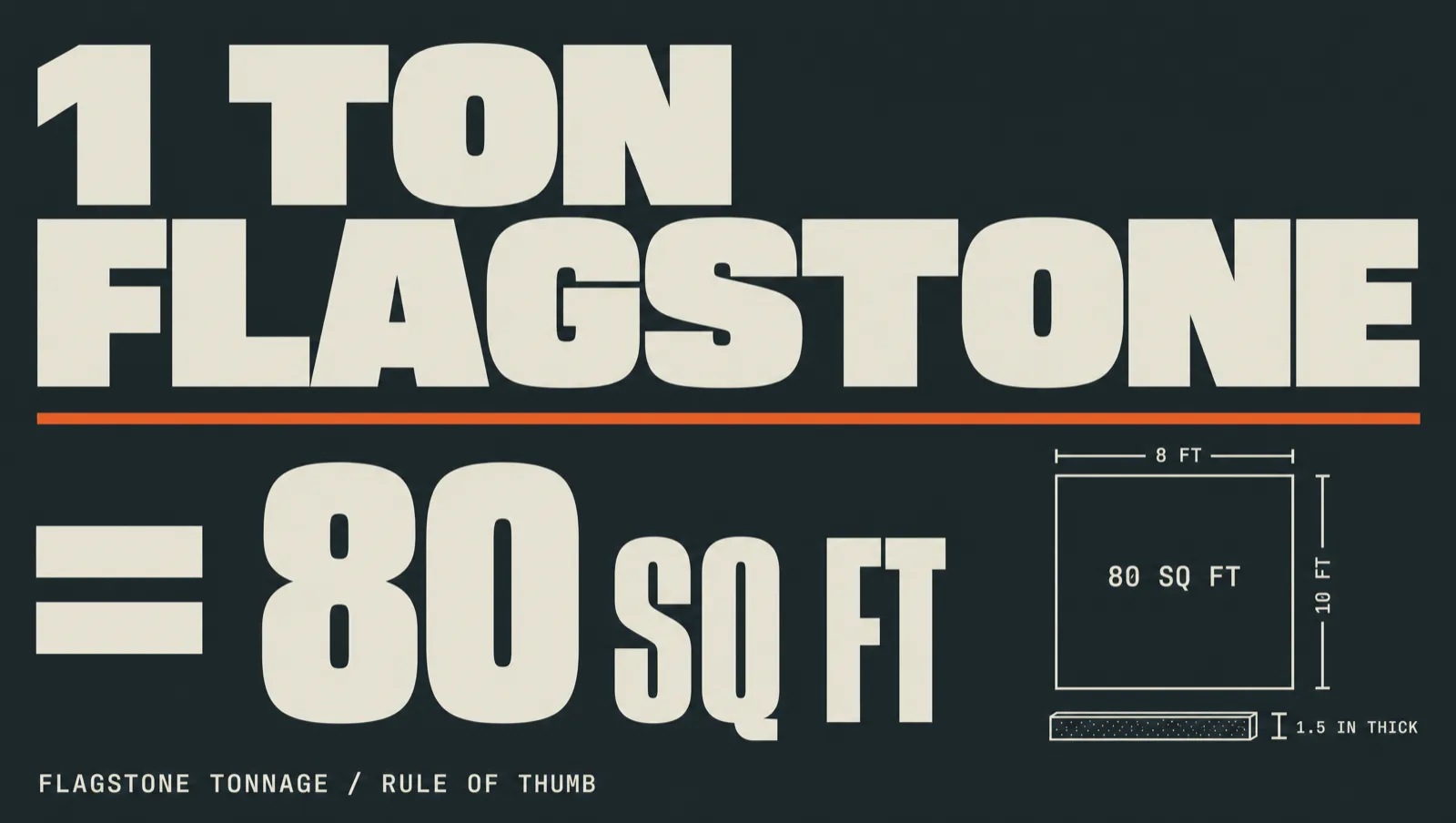
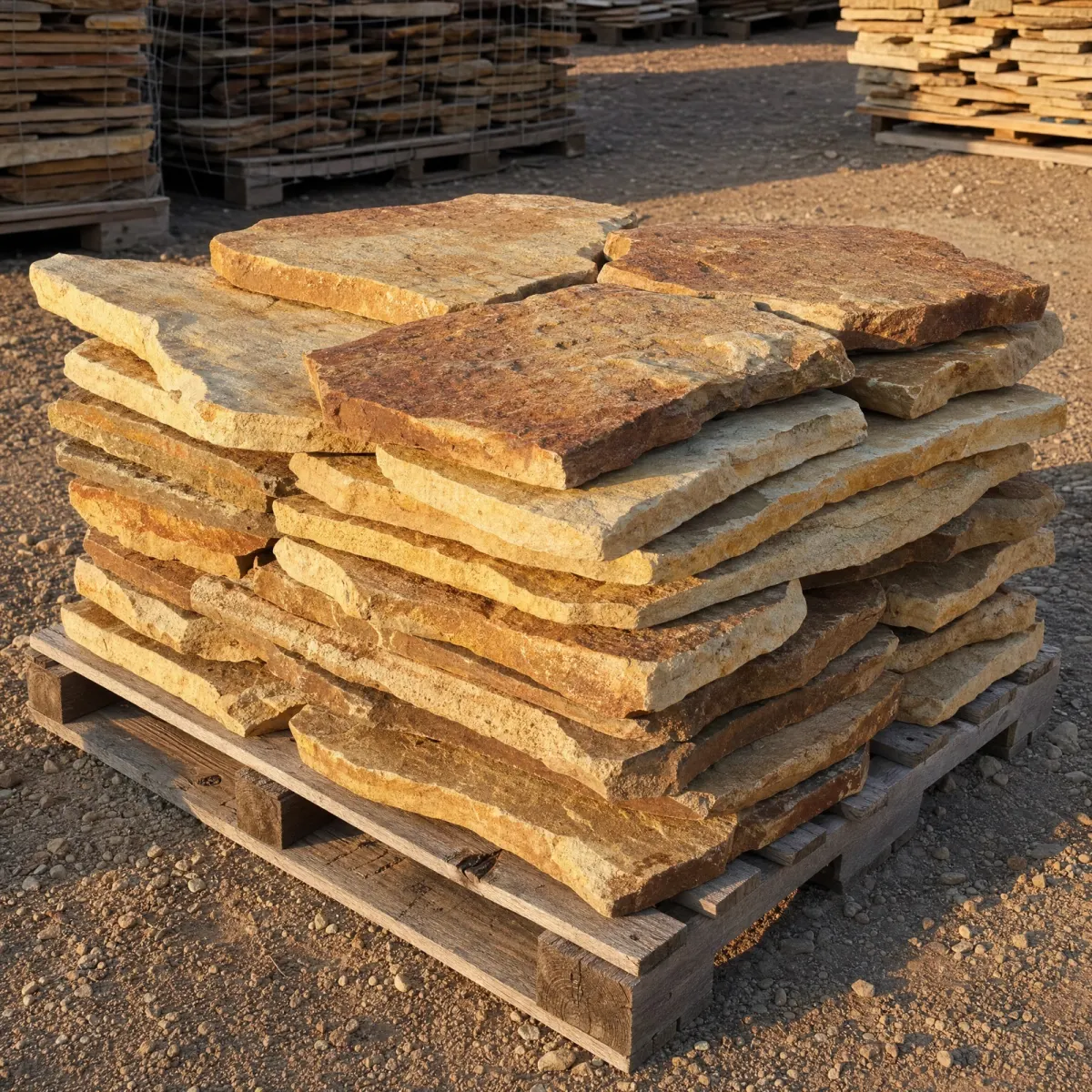
Flagstone is irregular, hand-fit, and looks like the ground decided to grow that way. Sold by the ton; one ton covers roughly 120 sq ft at the standard 1.5" thickness. We stock three:
- Oklahoma Multi-Color — the workhorse. Buff, gold, and rust tones in every pallet. Reads "traditional Texas" against limestone houses, crepe myrtles, and Bermuda lawns. Most affordable of the three.
- Arizona Buckskin — warm tan with rose veining. Premium feature stone. If you're building one accent area — a fire-pit pad, an entry landing — and want it to be the star, Buckskin pulls it off.
- Texas Cream — pale cream limestone flag. Bright, modern, reads cooler than the Oklahoma. Pairs beautifully with white-trim houses and contemporary plantings. Slightly more delicate than the Oklahoma — won't take a heavy vehicle parking on it.
Bluestone steppers — paths and side yards
Cut-to-shape pads, 24 inches round or square. Set them on a 2-inch sand bed, space them at a comfortable stride (about 24" center-to-center for adults), and you've got a tidy path that won't shift. Buy by the each.
Tumbled concrete pavers — modular patios
Holland (6×9, ~4.5 pcs/sq ft) and Cobble (5×7, ~4.1 pcs/sq ft). Same tumbled finish, different scale — Holland is the classic running-bond paver pattern, Cobble reads older and European. Concrete pavers go down faster than flagstone because every piece is the same height, and they cost less per square foot installed.
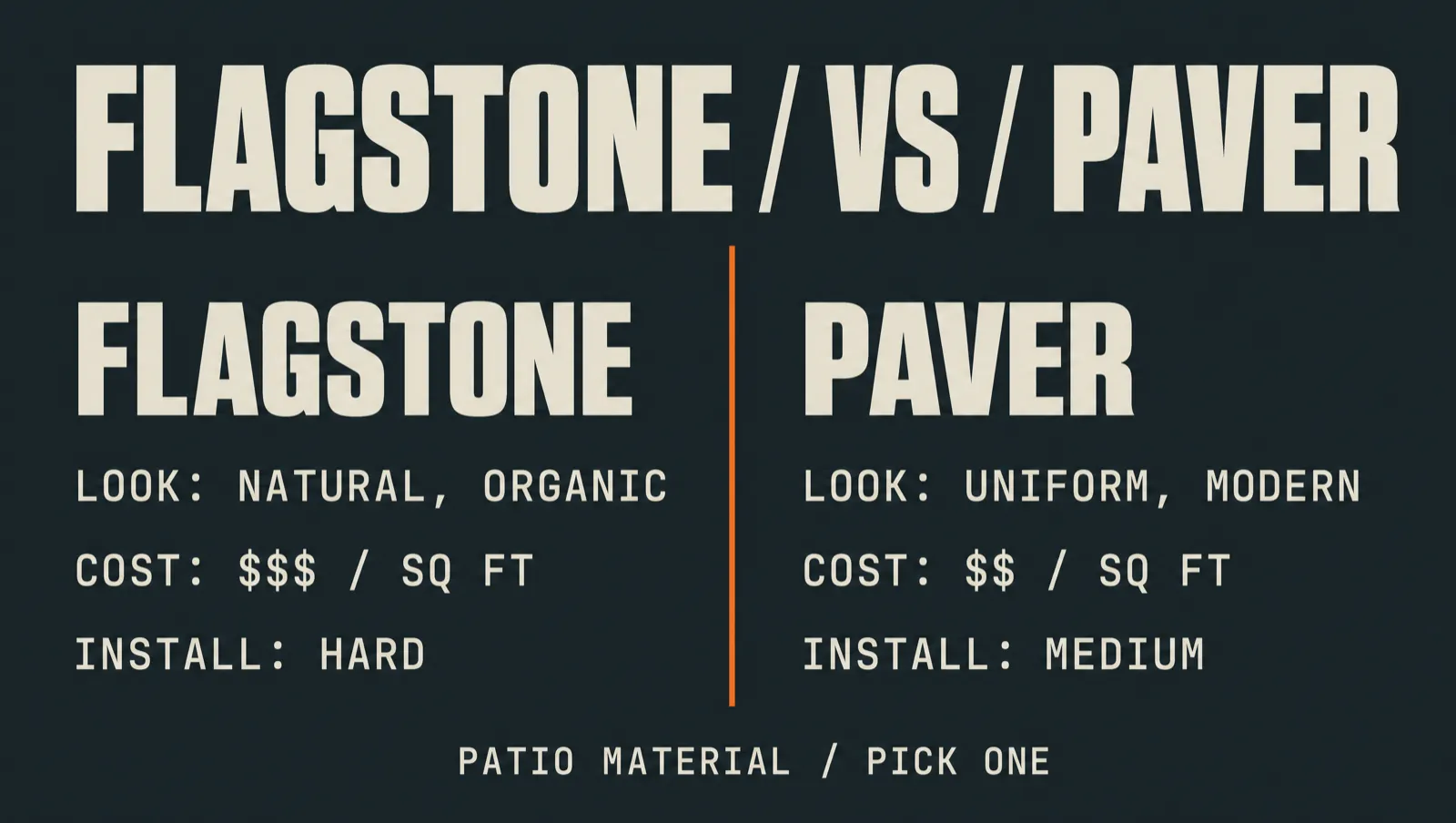
Flagstone vs paver — picking sides
| Natural flagstone | Concrete paver | |
|---|---|---|
| Look | Hand-fit, organic, no two installs alike | Uniform, geometric, predictable |
| Install difficulty | Higher — every piece is cut and fit | Lower — modular, pattern-based |
| Cost per sq ft installed | $14-22 | $9-14 |
| Lasts | Generations | 30+ years |
| Weight to handle | 60-180 lb per piece | 5-12 lb per piece |
| Heat in summer | Cooler underfoot | Hotter — concrete absorbs heat |
If you're DIY'ing a weekend project, pavers are friendlier. If you're hiring a mason and want it to look like it's been there forever, flagstone.
What you need besides the stone
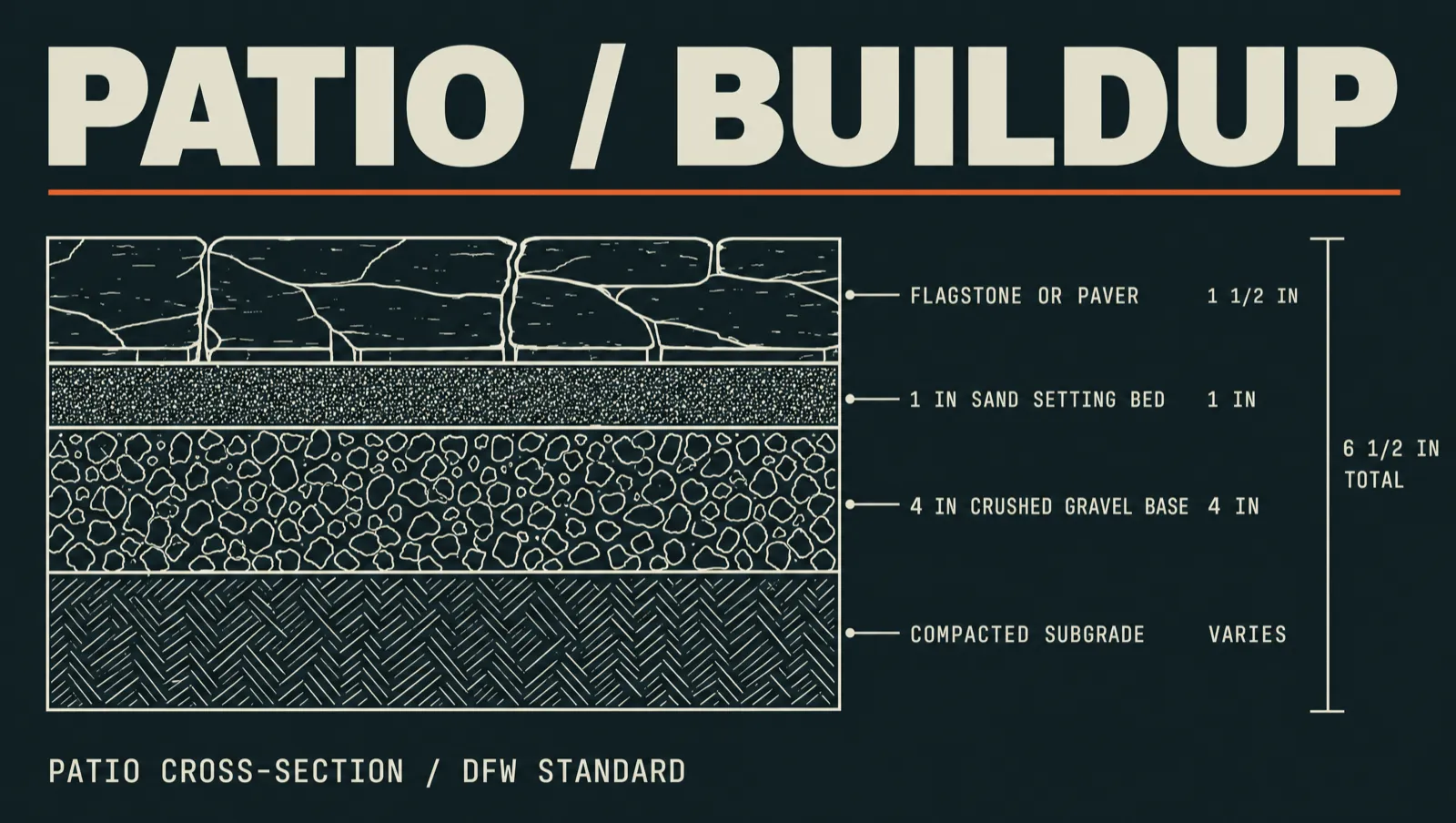
Don't buy flagstone without budgeting for the underneath. A patio that looks great on day one and is wobbly by year two skipped the base course. The standard build is:
- Excavate 4-5 inches
- Compact 2 inches of crushed limestone base
- Lay 1 inch of paver leveling sand
- Set the stone
- Sweep polymeric joint sand into the gaps and wet it down
Full measuring walkthrough, with the 10-15% waste factor pros add: How to measure a flagstone or paver patio.
Use the flagstone-patio calculator below — enter your patio size and we'll compute flagstone tons, leveling-sand tons, and polymeric-sand bags.
Contractor notes
Flagstone delivered on pallets (~3,500 lb each) — bring a tractor or arrange yard drop. Quantities under 1 ton can be hand-loaded into a contractor's trailer. Mixed-pallet pulls available with 48-hour notice — useful when you're sampling for a client on a feature wall.