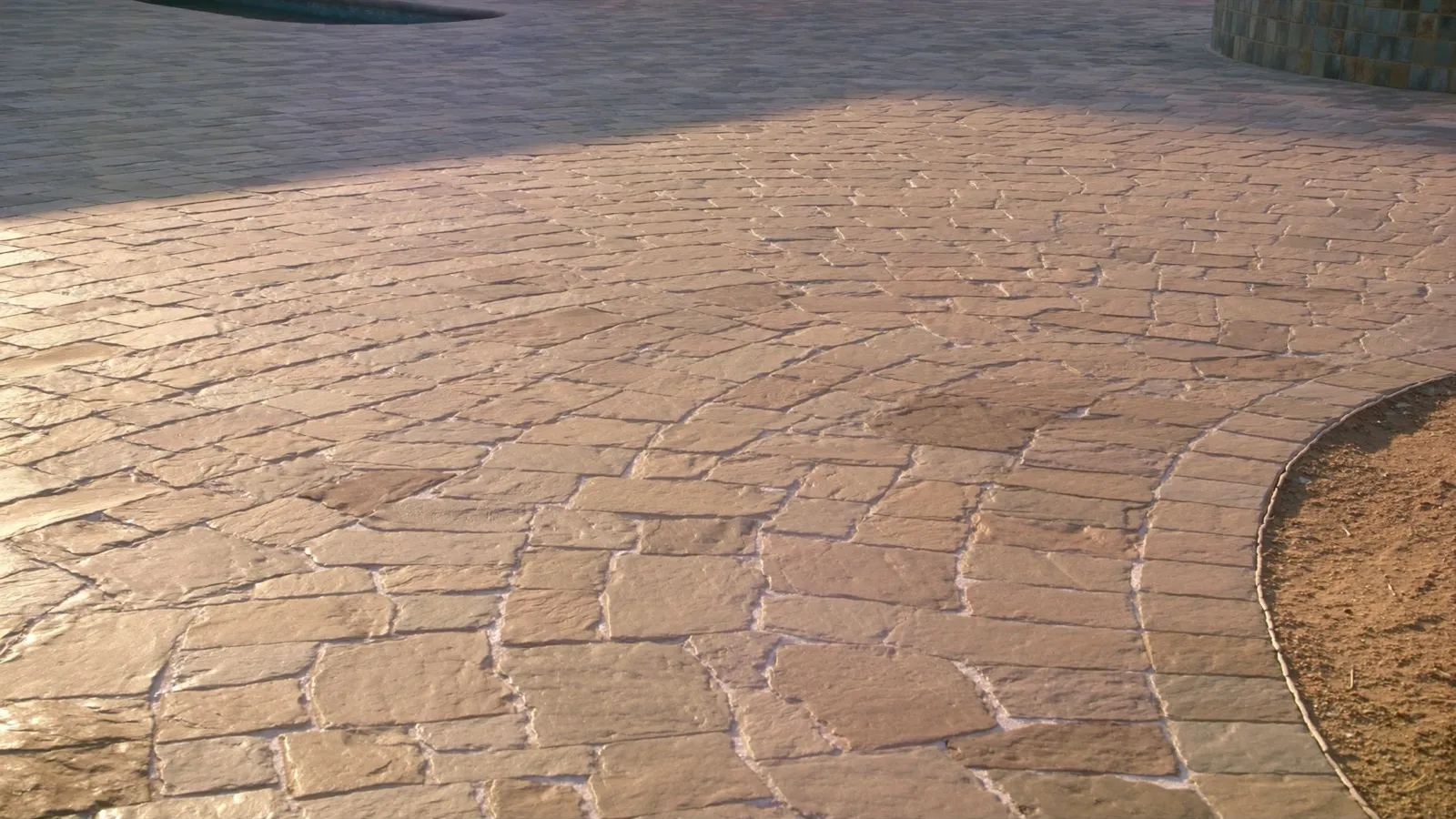
The short version
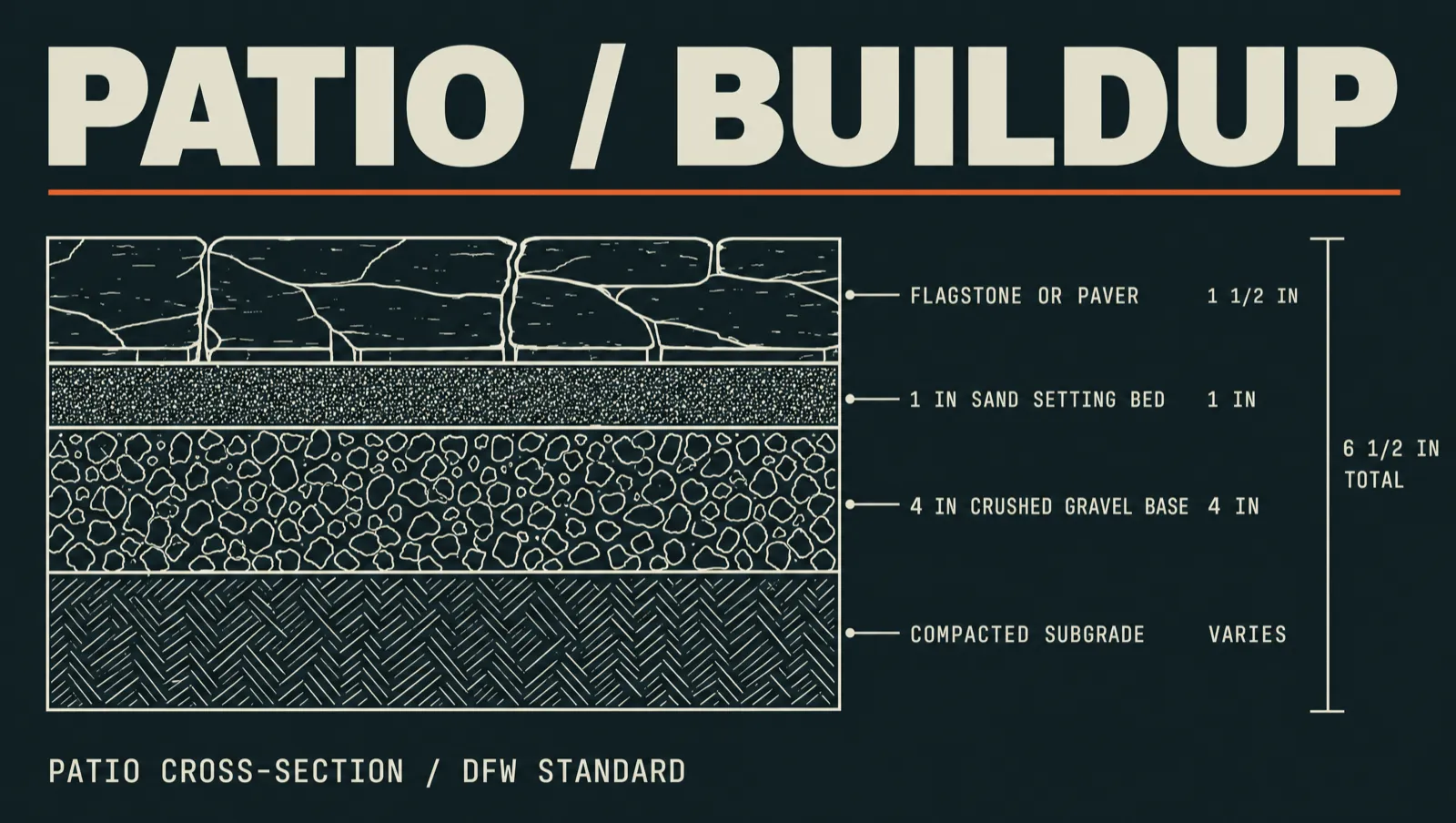
A typical flagstone patio takes about 1 ton of stone per 100 sq ft (set in a 1-1.5 inch bed of paver leveling sand or DG), plus 4-6 inches of compacted base underneath. Pavers are sold by piece count — get your sq footage, then add 10% for cuts.
The math
Step 1: measure the patio. For a rectangle, length × width. For a kidney or freeform shape, break it into rectangles and triangles and add them up. A 12 ft × 14 ft patio = 168 sq ft.
Step 2: pick your material and calculate.
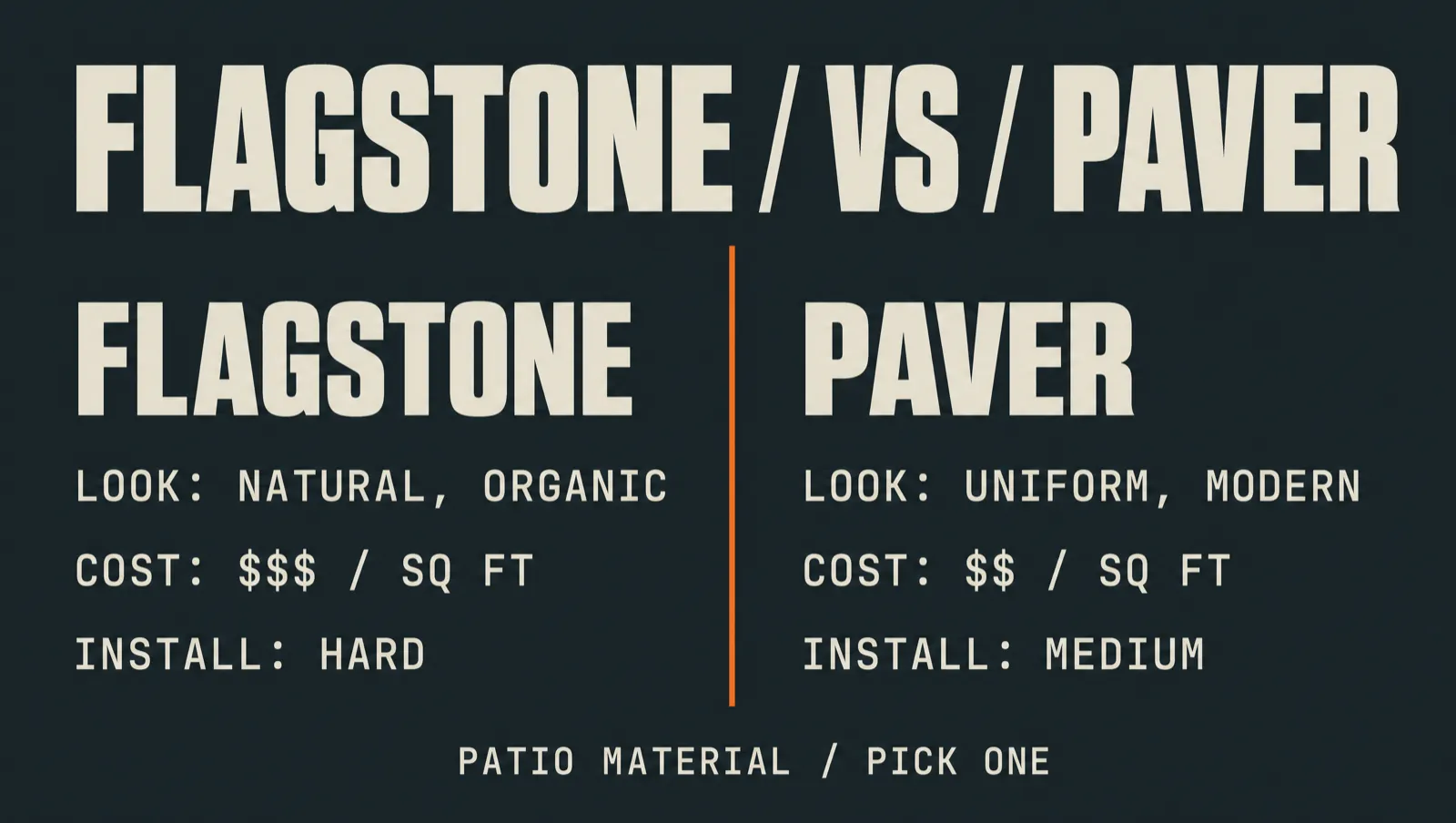
Flagstone (Oklahoma multi-color, Texas Cream, Arizona Buckskin): sold by the ton.
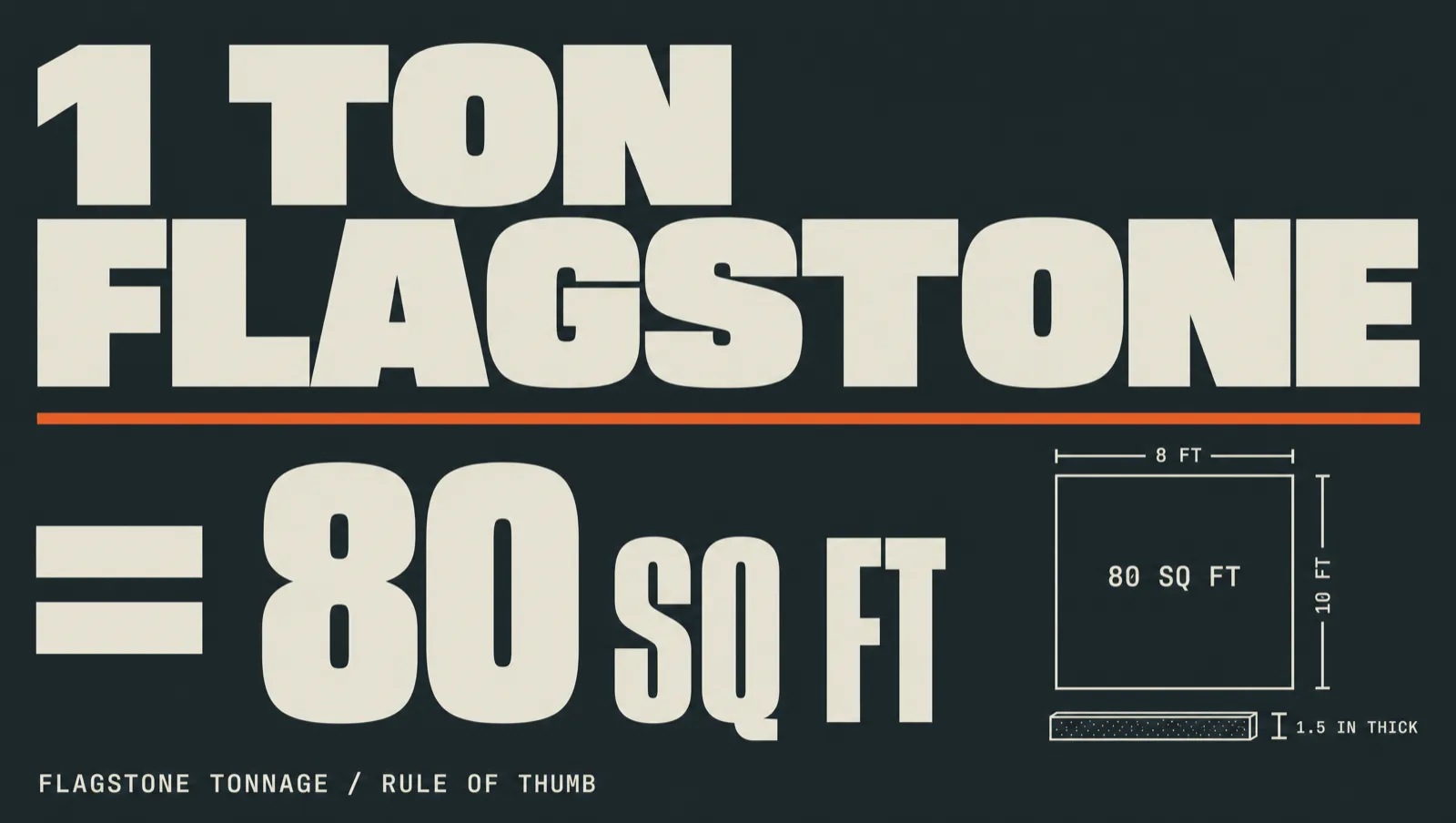
- ~100 sq ft per ton for standard 1-1.5" stone
- ~70 sq ft per ton for thicker 2-2.5" "stand-up" stone
For our 168 sq ft patio at 1.5" thick stone:
168 sq ft ÷ 100 = 1.68 tons → order 2 tons (always round up; flagstone breaks)
Add 15% for cuts and the inevitable pieces that look great in the pile and terrible in the patio. Contractors call this the "pretty tax."
Decomposed granite or crushed limestone base: 4 inches under flagstone, 6 inches under pavers driven on (driveway aprons, walkway corners that get a car tire). At 4" deep, 1 cu yd of base covers 81 sq ft.
168 sq ft × 4 in ÷ 324 = 2.07 cu yd of base → order 2.5 yards
Pavers (4" × 8" brick, 6" × 9" like our tumbled Holland paver, or 12" × 12" concrete):
- 4×8 brick: 4.5 pavers per sq ft → 756 pavers for 168 sq ft. Add 10% = 832.
- 12×12 concrete: 1 paver per sq ft → 168 + 10% = 185 pavers.
Polymeric sand for the joints: one 50 lb bag fills ~75-100 sq ft of joints depending on paver size. For 168 sq ft of standard pavers, 2 bags.
Common mistakes
- Skimping on base. 2 inches of DG under flagstone in DFW clay is going to heave the first time we get a hard freeze. 4 inches minimum, compacted in lifts.
- Forgetting edge restraint. Pavers without polymeric sand or a concrete/metal edge will migrate. Polymeric sand is non-negotiable for a patio that holds up past year two.
- Buying exact tonnage on flagstone. Order 15% over. You'll use it on the steps, the bench pad, or the next project — it doesn't go bad.
- Measuring inside the planned edge. Measure to the outside of the finished edge, then add 2-3 inches all around for edge restraint or the soldier course.
What to do next
For a deeper walkthrough of base depth, joint sand, and edge restraint by stone type, head to the hardscape materials page — the patio-flagstone wizard on that page walks you through stone choice, base depth, and joint material in about 90 seconds and builds the full order. To shop flagstone, pavers, and base material directly, see hardscape stock and polymeric sand in accessories.
Also useful
- How much rock or gravel do I need — for the DG / crushed limestone base
- How to size a gravel driveway — same base concepts, larger scale