The parts that finish the job
Accessories are everything that isn't the main material but is the difference between an install that lasts and one that looks tired in 18 months. You can have the best mulch in DFW, but without edging it spills onto the lawn and without fabric the weeds come up through it. You can lay flagstone over a perfect base course, but without polymeric joint sand the joints wash out the first time it rains hard.
We stock the install items the wizards on this site recommend — same SKUs the contractors trust, sold to homeowners too. No upsell games.
What goes with what
Edging — keeps materials in place
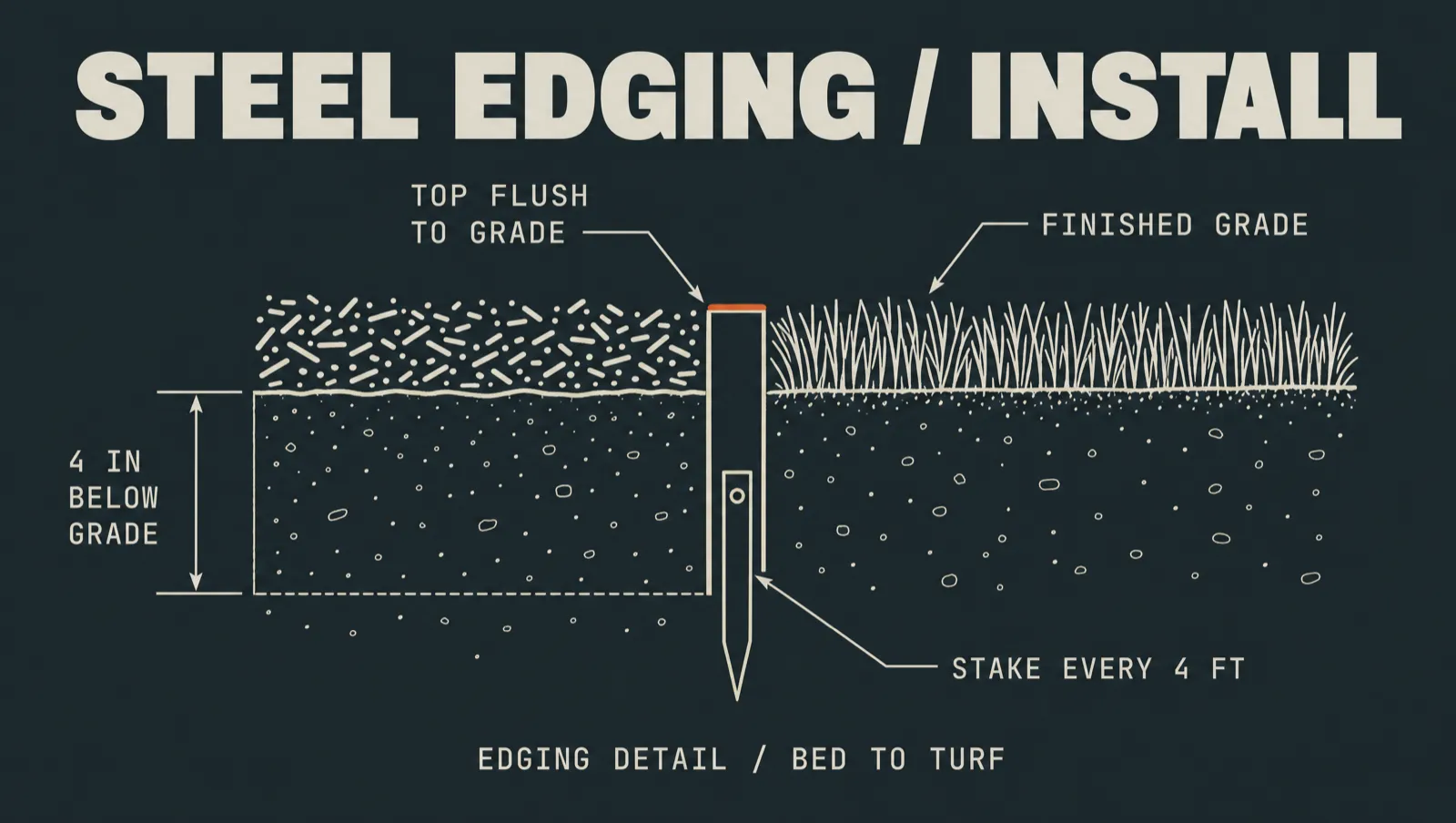
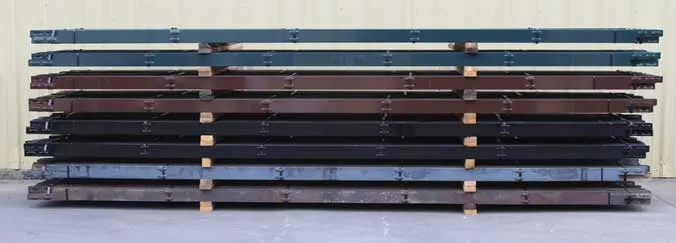
- Steel edging (1/8" × 4" × 10') — heavy-duty galvanized steel. Stakes drive into clay easily; once installed it's there for decades. Use it around mulch beds adjacent to lawn, around gravel paths, around any bed where the material wants to migrate.
- Aluminum edging (14ga × 4" × 8') — bend-to-shape, lighter than steel. Easier to curve around organic-shaped beds. Won't rust. Slightly less rigid — fine for residential, but heavy commercial installs go steel.
- BendaBoard (4" × 20') — flexible recycled plastic. Cheapest, easiest to install (just pin it down), best for curves. Less rigid than steel — straight runs over 20 feet, use steel or aluminum instead.
Weed barrier — woven, not the thin stuff
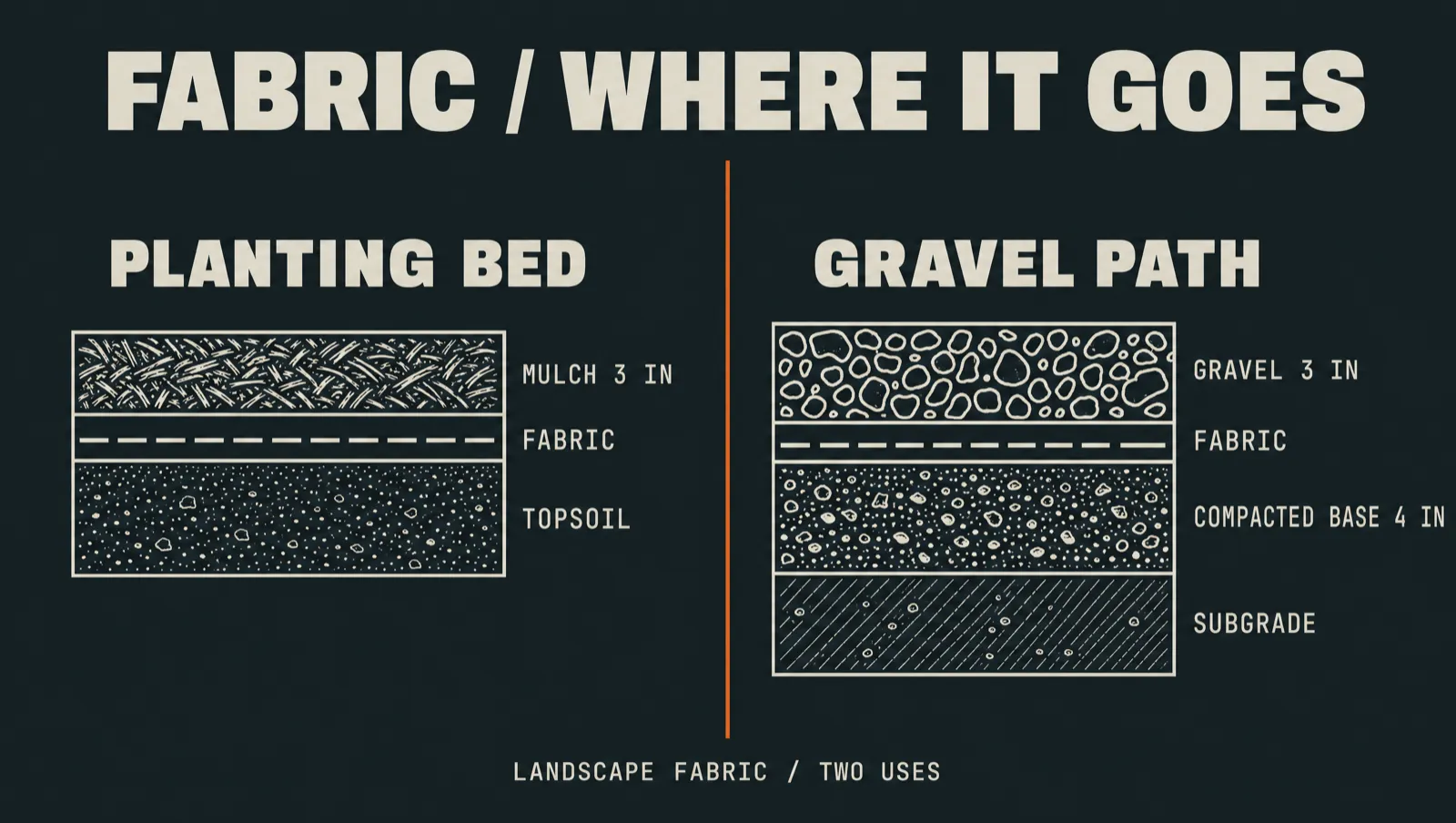
- Pro Landscape Fabric (4 ft × 100 ft) — 400 sq ft roll. Woven polypropylene. Heavy enough to last under mulch and gravel for 5+ years.
- Pro Landscape Fabric (6 ft × 300 ft) — contractor roll, 1,800 sq ft. Same fabric, bigger roll. Get this if you're doing multiple beds in one weekend.
Don't buy the thin "weed block" from the box store for any bed that's going to have mulch or rock on top — it breaks down inside a year and you'll end up pulling it back out.
Joint and bedding sand — hardscape essentials
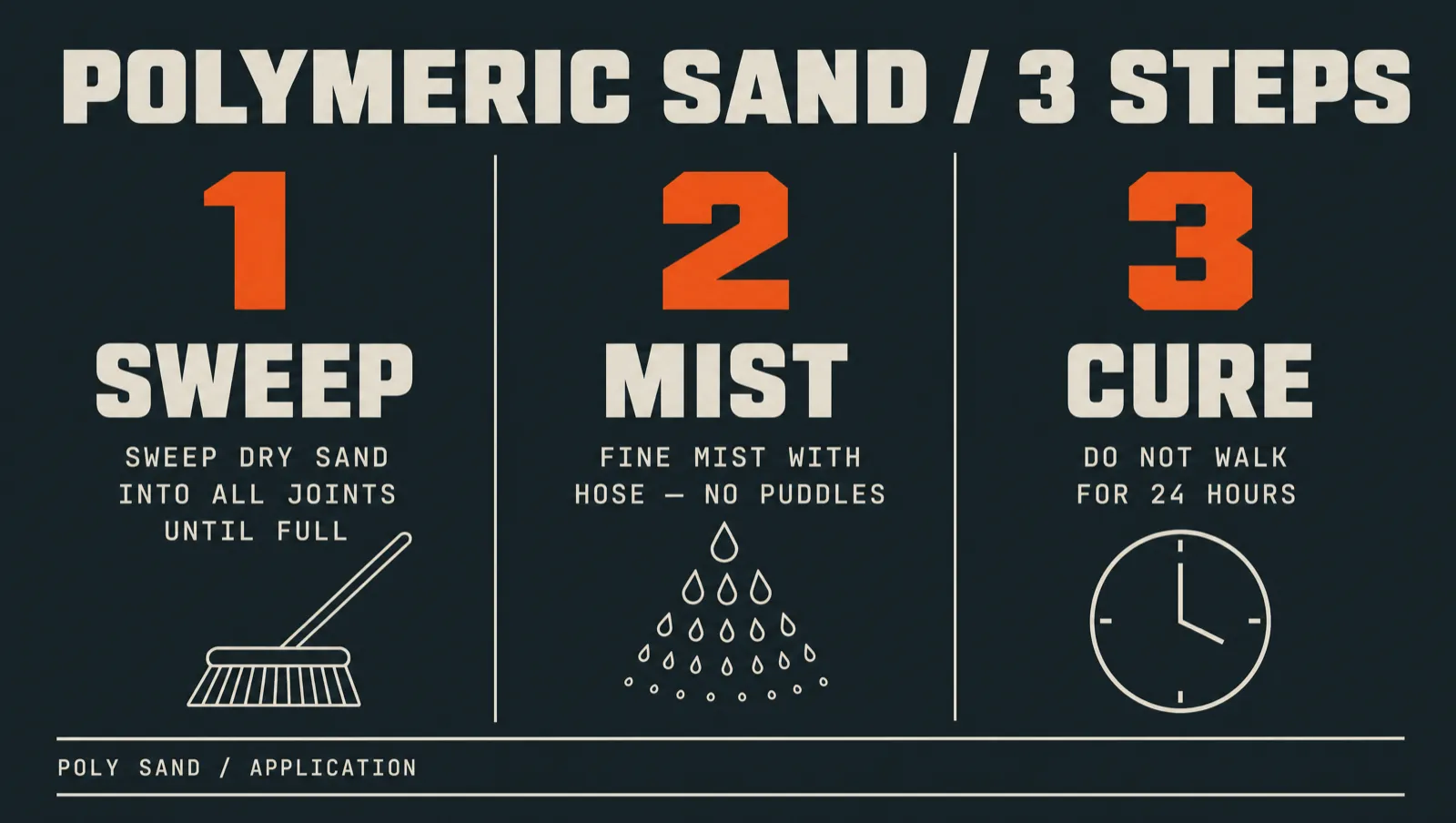
- Polymeric Joint Sand (50 lb) — sand with a binder that hardens when wet. Sweep into the joints of pavers or flagstone, mist with water, joint locks. Stops weeds, ants, and erosion. Re-do every 5-7 years.
- Paver Leveling Sand (per ton) — concrete sand for the 1-inch bedding course under pavers and flagstone. Don't substitute play sand — wrong grain shape, paves wobble.
Drainage — French drains, downspout runs
- 4-inch Perforated Drain Pipe (10 ft stick) — slotted HDPE. The pipe in the bottom of a French drain. Wrap in fabric so silt doesn't clog the perfs.
- 4-inch Solid Drain Pipe (10 ft stick) — un-slotted HDPE. The outflow pipe that carries water from the drain field to daylight or a curb cutout.
Sizing the whole drain, rock and all? See How to size a French drain.
How much do I need
| Project | Accessory math |
|---|---|
| Mulch bed perimeter | ~20 LF edging per 100 sq ft bed |
| Mulch bed weed barrier | 1 roll (4 ft × 100 ft) per 400 sq ft |
| Flagstone patio joints | 1 bag polymeric per 80 sq ft |
| Paver patio joints | 1 bag polymeric per 100 sq ft |
| Paver/flagstone bedding | 1 ton leveling sand per 320 sq ft |
| French-drain pipe | 1 coil (100 ft) per 100 LF run |
Most accessories ship in cases or rolls — easy to throw into a truck-bed delivery with your mulch or rock. There's no minimum order on accessories; we'll add a roll of fabric or a couple bags of polymeric to any bulk delivery for no extra freight.
Contractor notes
Volume pricing on edging at 20+ sticks and polymeric sand at 20+ bags. Standing PO numbers handled at the scale — no separate ticket for accessories. Custom-cut edging available with 24-hour notice — useful for tight curves where pre-fabricated lengths waste material.