The short version
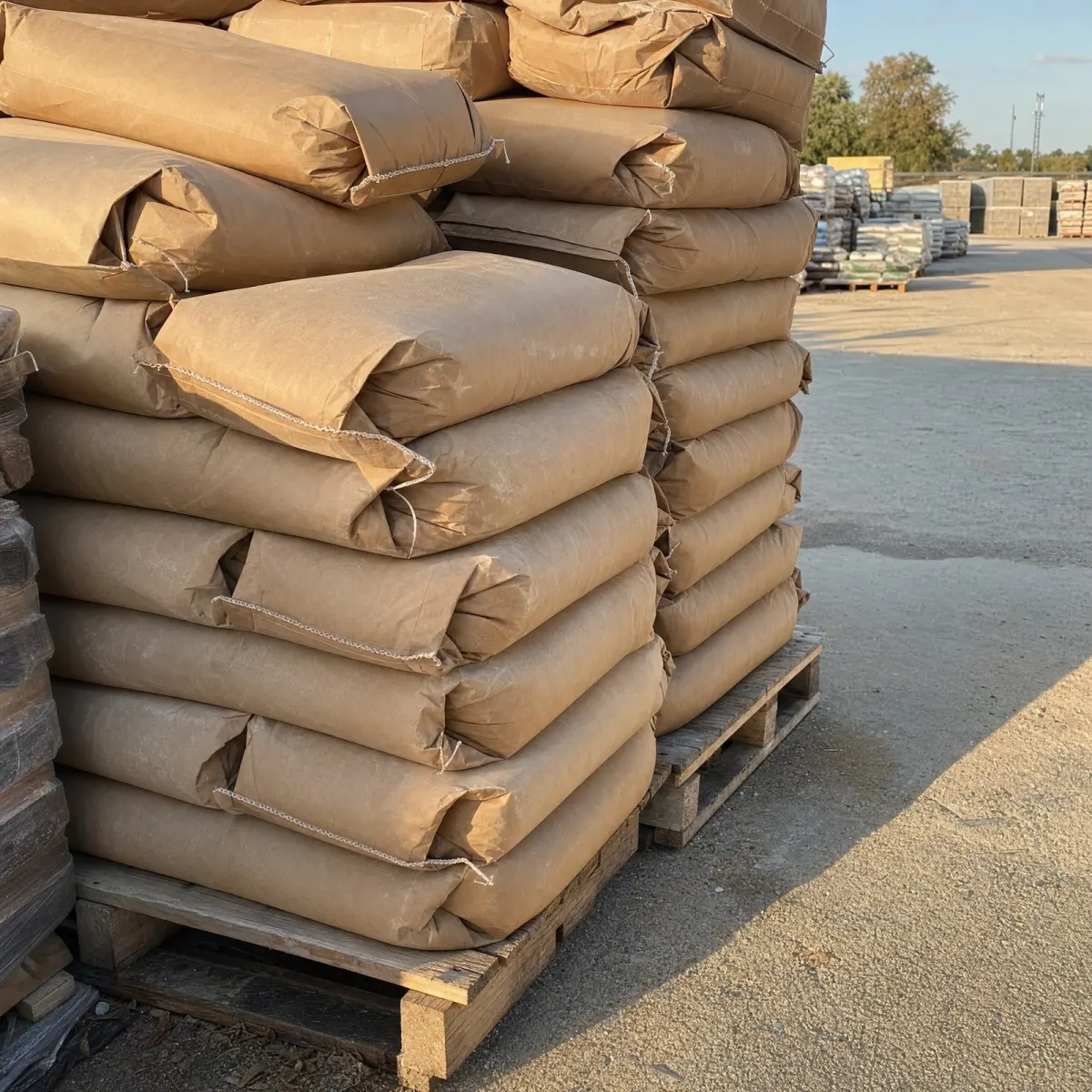
Polymeric sand is fine sand mixed with a polymer binder that hardens when you wet it. Sweep it into dry paver or flagstone joints, compact, brush the surface clean, and mist. The joint locks against weeds, ants and washout. Plan on about 1 bag per 100 sq ft of tight-jointed pavers; flagstone, with wider joints, takes more. Comes in 50 lb bags, in tan and gray.
What it does
Regular sand in a joint washes out in the first hard rain, lets ants tunnel through, and gives weed seeds a place to sprout. Polymeric sand sets up into a firm joint that stays put, keeps the pavers from shifting, and stays flexible enough to ride out small movement. Use it:
- On a new install, as the last step after the pavers or flagstone are set.
- For a joint refresh, after pressure-washing out the old sand and weeds and letting everything dry.
- For repairs, in joints where the original sand has washed out.
Pavers vs flagstone joints
- Pavers (like our tumbled Holland paver or cobble paver) have narrow, consistent joints. Polymeric sand is the standard joint fill, and you run a plate compactor over it to settle it.
- Flagstone (Oklahoma, Texas Cream) has wide, irregular joints, so it takes more sand per square foot. Skip the plate compactor on flagstone; settle the sand by hand.
Every polymeric sand has a maximum joint width and a minimum joint depth printed on the bag. Check it before you buy for wide flagstone joints.
How to apply
- Start dry. The pavers, joints and sand must all be completely dry. Don't install with rain due in the next 24 hours.
- Fill the joints. Sweep sand into the joints with a stiff broom until they're full to the top.
- Compact (pavers only). Run a plate compactor over the surface to settle the sand, then top the joints off again.
- Clean the surface. Brush off every bit of sand from the paver faces, then follow with a leaf blower on low. Anything left on the surface cures into a haze.
- Mist, don't flood. Wet the joints with a fine shower setting, just enough to activate the binder, following the bag instructions.
- Let it cure. Stay off it for at least 24 hours.
Coverage per bag
Coverage depends on joint width and depth. For standard tumbled-paver joints:
| Patio size | Bags (pavers) | Bags (flagstone, wider joints) |
|---|---|---|
| 100 sq ft | 1 | 1-2 |
| 200 sq ft | 2 | 3 |
| 400 sq ft | 4 | 5-6 |
| 800 sq ft | 8 | 10-12 |
The manufacturer's coverage chart on the bag is the final word for the specific product. Add a partial bag of margin for corners and the joints you'll top off after compacting. The flagstone patio wizard on the hardscape page works out bags for you, and how to measure a flagstone or paver patio covers the full material list.
Why it fails (and how to avoid it)
- Haze on the pavers. Sand left on the surface when you wet it. Brush and blow the surface clean first.
- Soft or crumbly joints. Too little water, so the binder never activated; or too much, which washes the binder out of the joint. Mist in passes.
- Joints that sink or crack. The joint wasn't full or wasn't compacted, or the base underneath is moving. Polymeric sand can't fix a bad base: build on compacted crushed limestone with a 1" bed of paver leveling sand.
- Washed-out joints. Rain before the sand cured, or damp joints at install. Watch the forecast.
- Old stock. The binder can absorb humidity in storage. Don't buy more than one season's worth.
Buying tips
- Match the color to your hardscape: tan or gray.
- For a 200 sq ft paver patio, plan on 2 bags plus a little margin.
- Browse pavers, flagstone and base in Hardscape.
Contractor notes
Volume break at 20 bags. Bundle quote available with paver/flagstone orders.