Soil is half the work
Anybody who's tried to grow a vegetable in North Texas clay knows: the soil is the project. Native DFW soil is heavy clay, alkaline, and short on organic matter. It's great for Bermuda and post oaks and not much else. If you want a productive raised bed, a thriving front-yard bed, or a lawn that doesn't turn into concrete by July, you're building soil — and that means bringing some in.
We sell soil by the cubic yard. One yard covers about 40 sq ft at 8 inches deep — that's a typical raised-bed fill. New construction grading needs more — a 1,500 sq ft new build often takes 15-25 yards just to bring the dirt up to the slab.
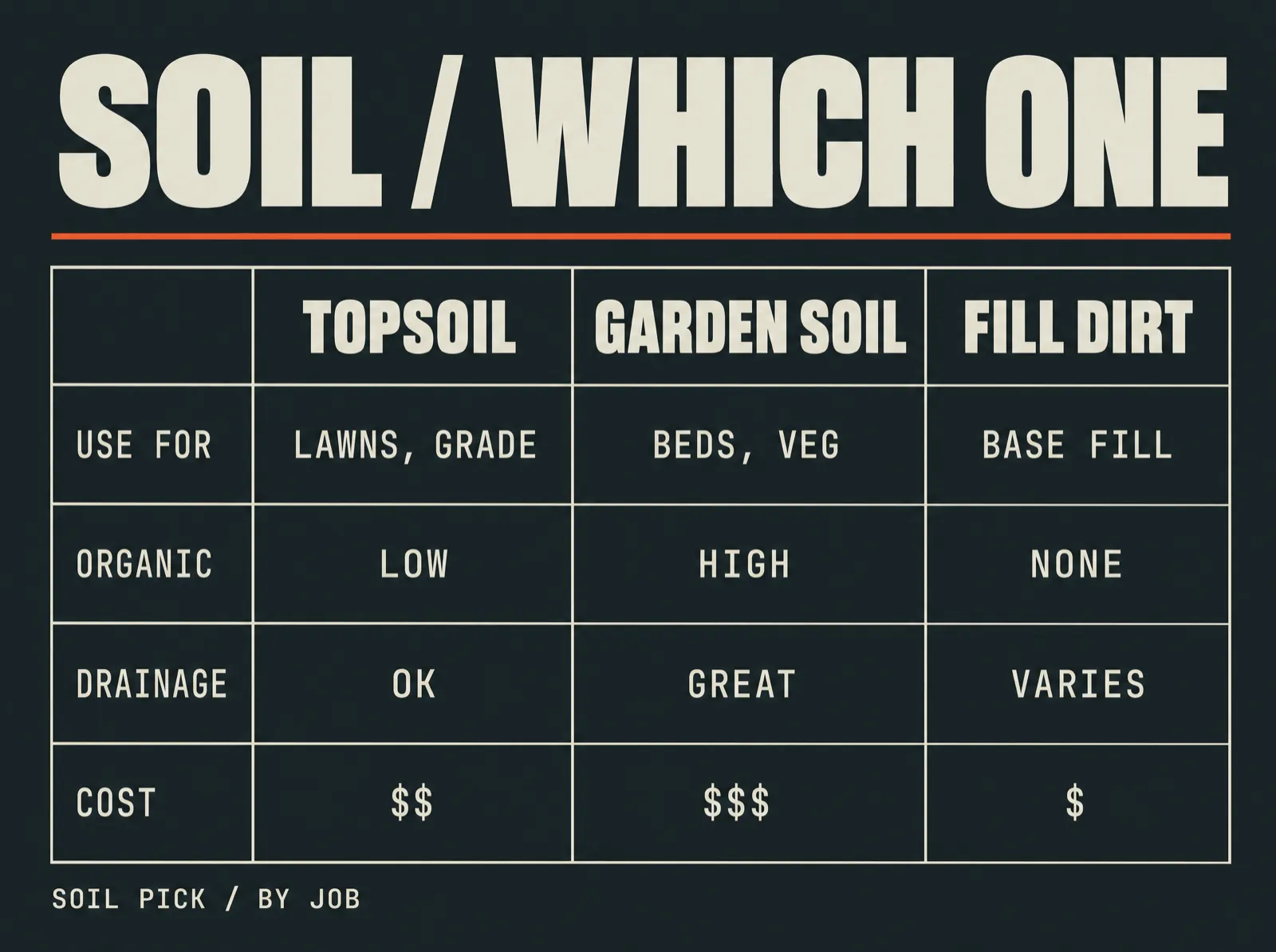
Which soil for which job
General planting — Premium Soil Mix
Screened topsoil blended with organic matter. The default "fill this bed" soil. Use it for new landscape beds, sod prep, lawn repair, and tree-pit backfill. Drains better than native clay, holds nutrients better than sand-heavy mixes.
Raised beds & containers — Bella Flora Potting Mix
This is the bed mix. Built specifically for raised beds and large containers — drains free, holds water without compacting, ready to plant the day it's delivered. More expensive than Premium Soil Mix because of the inputs. Worth it for vegetable beds and any container that's going to sit through a Texas summer.
Lawn repair — Sandy Soil Mix
Sand-heavy blend. Use it as a top-dress on lawns to level low spots, fix sprinkler-trench scars, or build a 1-inch dressing over freshly cored Bermuda. Drains fast — too fast for most planting beds — but exactly right for turf work.
Drought-tolerant beds — Lava Sand Planting Mix
Planting mix amended with lava sand. The lava sand improves aeration and water-holding without compacting; people use it under xeriscape and native-plant beds where the goal is "set it and forget it." Cult product, but the people who use it swear by it.
Soil amendment — Enriched Organic Compost
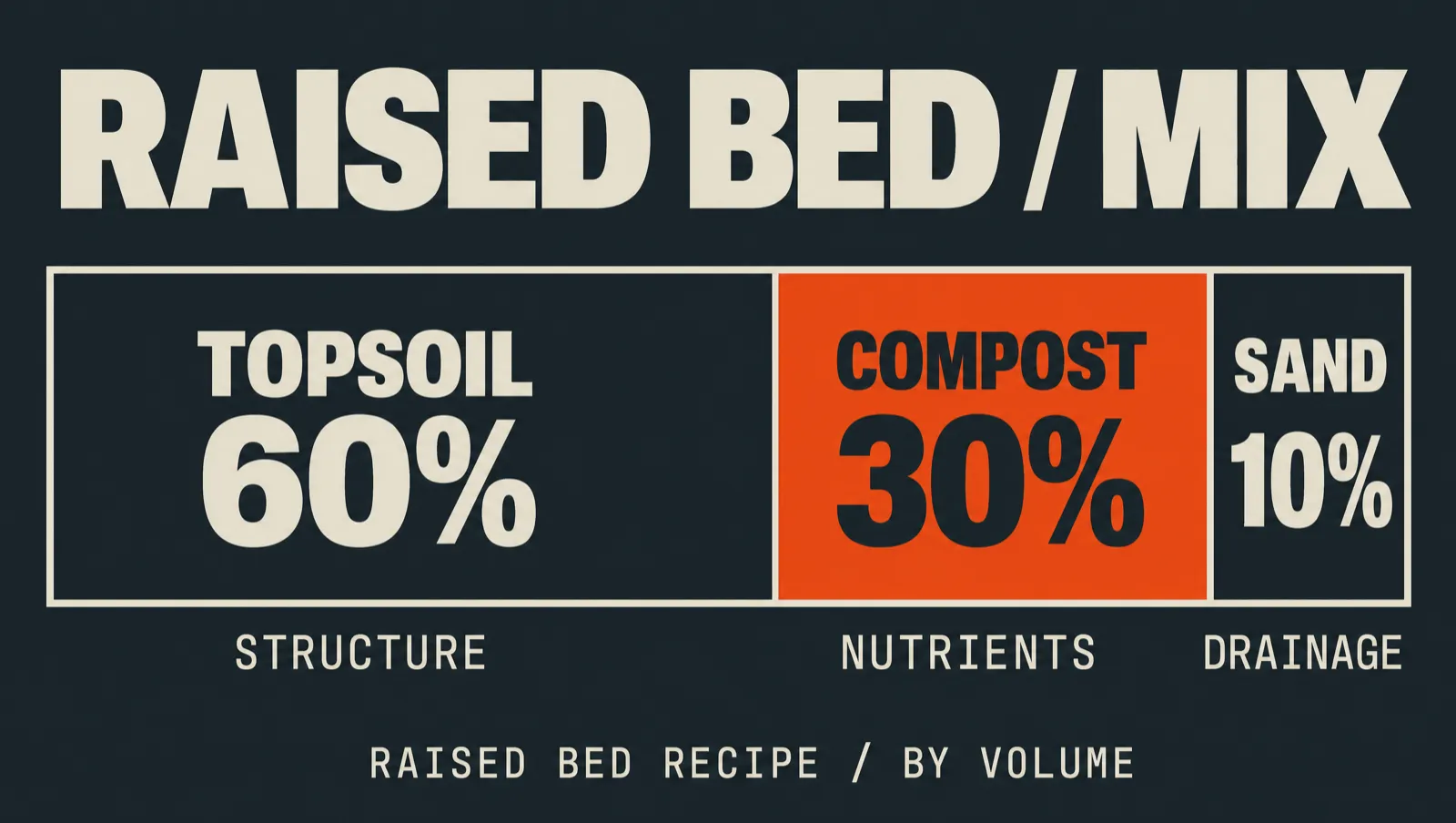
Screened, biologically active compost. Till 2-3 inches into the top half of an existing bed each spring and your soil structure improves year over year. For vegetable beds, mix 30% compost into your soil at install — then top-dress an inch every spring after that.
Specialty — Zoo Poo
Composted herbivore manure from the Fort Worth Zoo. Cult favorite — the elephant/giraffe/zebra inputs make a richer compost than standard cow manure. Limited supply, ask about availability.
Grade work — Fill Dirt
Unscreened, untested fill. For grade work, low-spot fill, and dirt the bug-and-weed control isn't the point of. Cheap by design — don't plant in it.
How to actually use this
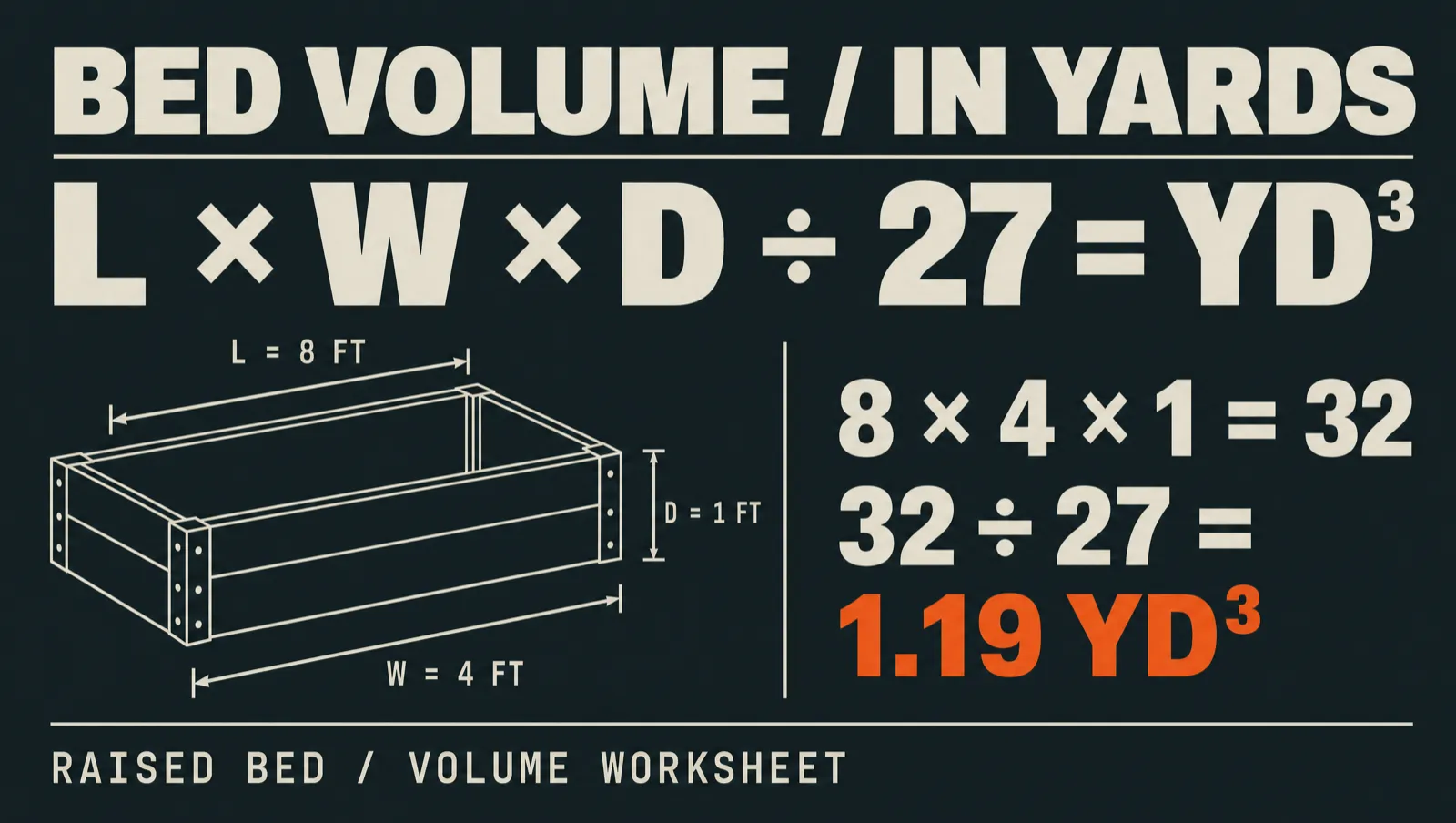
For a new raised bed, the standard mix is 70% Premium Soil Mix (or Bella Flora) and 30% Enriched Organic Compost. For a 4x8 raised bed at 12 inches deep: 32 cu ft, or about 1.2 cu yd. Round up to 1.5 yards for the first fill — soil settles 10-15% in the first season.
For existing beds, the right move is top-dressing: an inch of compost worked into the top 4 inches once a year. A typical 200 sq ft bed needs about half a cubic yard of compost annually.
Full bed math, blend ratios, and the settling allowance: How much topsoil for a raised bed or yard?.
Use the garden-bed calculator below — enter the bed area and depth and we'll bundle the right ratio of soil, compost, and a top dressing of mulch.
Contractor notes
New-construction grading: we drop fill dirt and screened topsoil in any order — 22-yard tandems standard. Compost in cubic-yard quantities for landscape installs; ask about super-sack quantities for fenced sites where a dump truck won't fit. All bulk soil is screened to 1/2" or finer except Fill Dirt, which is run-of-pit.