The short version
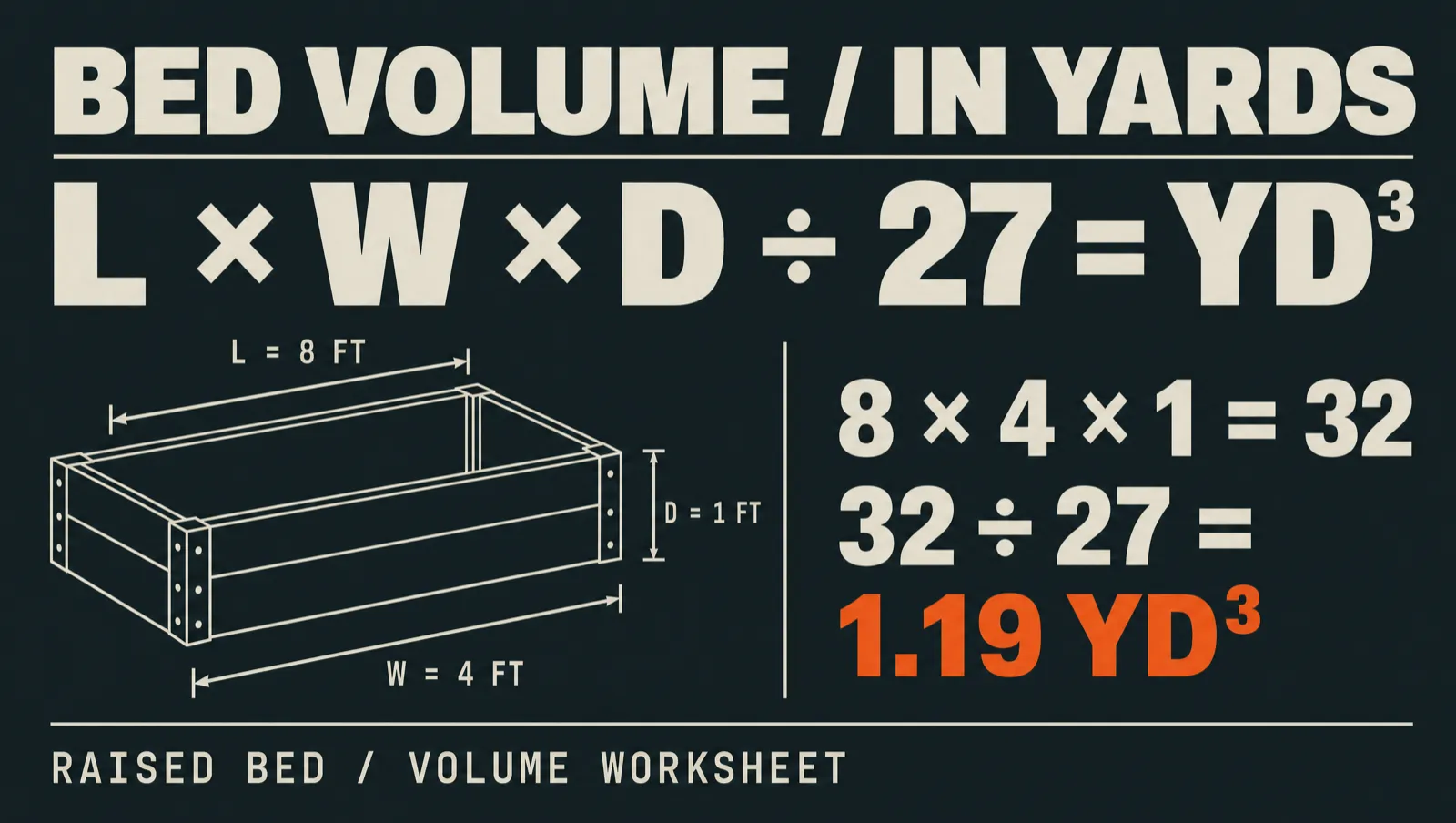
Length × width × depth (all in feet) ÷ 27 = cubic yards. That's the only formula you need for soil. A standard 4 ft × 8 ft raised bed filled 10 inches deep is just under 1 cubic yard. A 1,000 sq ft yard topdressed 1 inch deep is about 3 cubic yards.
The math
The 27 comes from 27 cubic feet in a cubic yard. Convert your depth to feet before you multiply (3 inches = 0.25 ft) or use the inch-based shortcut:
sq ft × inches deep ÷ 324 = cubic yards
Raised beds — Here's the working table:
| Bed size | 8" deep | 10" deep | 12" deep |
|---|---|---|---|
| 4 × 4 | 0.4 cu yd | 0.5 cu yd | 0.6 cu yd |
| 4 × 8 | 0.8 cu yd | 1.0 cu yd | 1.2 cu yd |
| 4 × 12 | 1.2 cu yd | 1.5 cu yd | 1.8 cu yd |
| 8 × 10 | 2.0 cu yd | 2.5 cu yd | 3.0 cu yd |
A single 4×8 bed at 10 inches comes out to exactly 1 cubic yard, which is one of those happy coincidences gardeners memorize.
Yard leveling — Top-dressing a lawn or filling low spots:
1,000 sq ft × 1 in ÷ 324 = 3.1 cu yd
For washed-out spots after a big storm, 2-3 inches of topsoil raked smooth and seeded or sodded back in. For leveling an existing lawn, Sandy Soil Mix (about 70% sand) drains fast and settles flat. For a general topdress before overseeding, half an inch is plenty — that's 1.5 cu yd per 1,000 sq ft.
Topsoil vs garden blend — These aren't the same thing:
- Screened topsoil — the cheap option. Native dirt, screened, mostly clay in DFW. Good for filling holes, leveling lawn areas, building up grade against a foundation. Don't grow vegetables in it. For pure grade work, unscreened fill dirt is cheaper still; for general beds and sod prep, Premium Soil Mix is screened topsoil with organic matter already blended in.
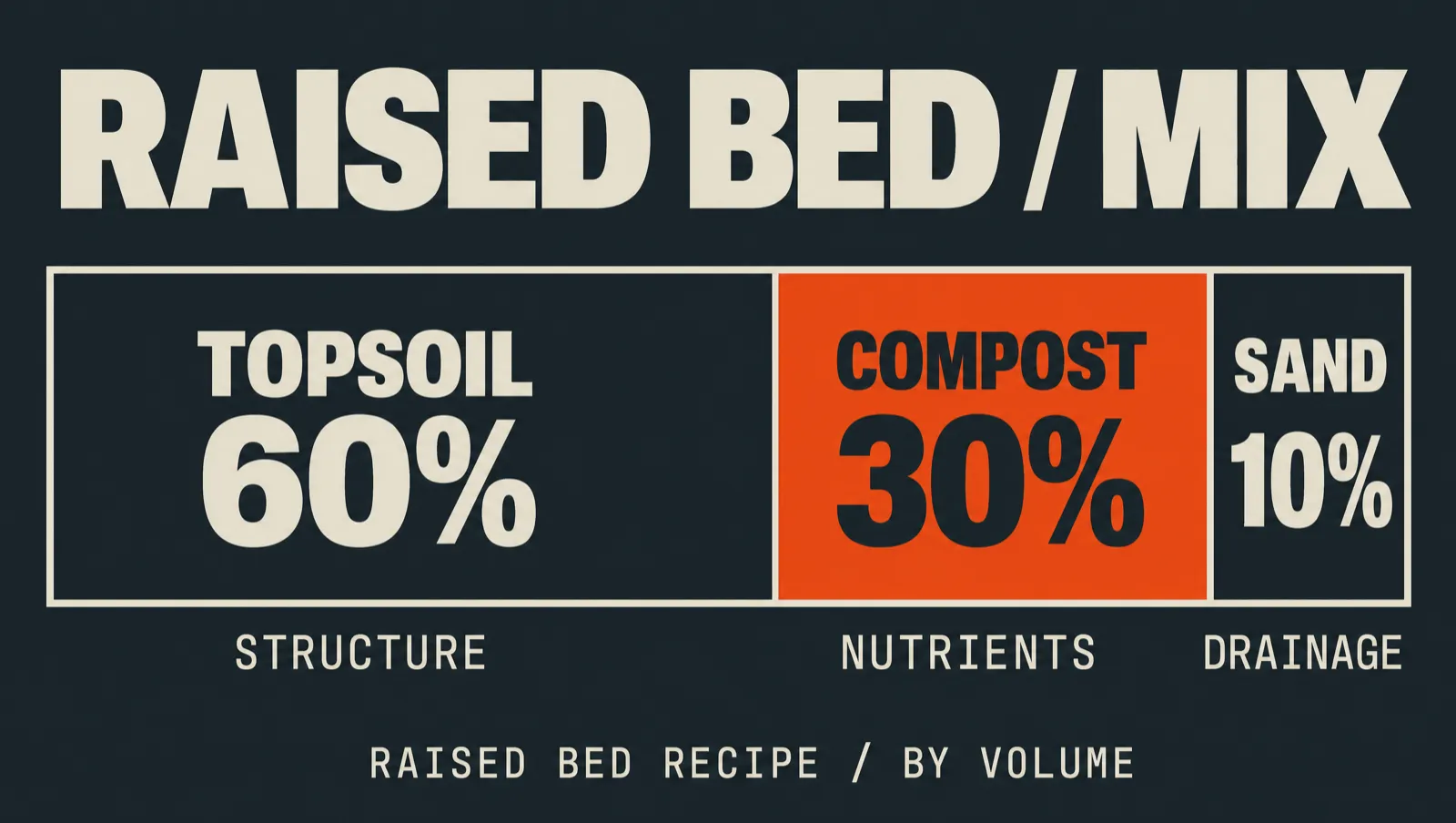
- Garden blend / raised-bed mix — topsoil + compost + sand in roughly 50/30/20. Drains, holds nutrients, doesn't pack into a brick after the first rain. This is what raised beds want.
- Pure compost — for amending existing beds. Our enriched organic compost is hot-composted and screened. A 1" topdress of compost over an existing bed once a year is the secret to perennial-flower beds that look good year after year.
Common mistakes
- Filling a raised bed with pure topsoil. It will pack. By July you'll have a 4×8 brick that nothing roots into. Use garden blend, or build your own at 60% topsoil / 30% compost / 10% expanded shale.
- Underestimating depth shrinkage. Loose soil settles 10-15% after the first deep watering. Fill the bed proud (an inch above the rim) — it'll be level by week two.
- Buying in bags for a yard project. A 0.75 cu ft bag of topsoil costs roughly what a cubic foot of bulk costs. Past 5-6 bags, bulk by the cubic yard is half the price. We load it for free.
- Ignoring the clay underneath. DFW soil is heavy clay. If you're building a raised bed on top of clay, score the clay with a fork or scratch it with a tiller before you fill — gives roots somewhere to go and lets water drain.
What to do next
Punch your bed dimensions into the soil calculator — it does the divide-by-324 math, rounds to half-yards, and offers compost and expanded shale add-ons. The garden-bed wizard on the soil page walks you through topsoil vs garden blend, depth, and whether to add compost for your specific project. To browse what's in the yard right now, see soil & compost stock.
Also useful
- How much mulch do I need — same cu-yd formula, lighter material
- How to measure sod for your lawn — topsoil prep before sod arrives is half the install