The short version
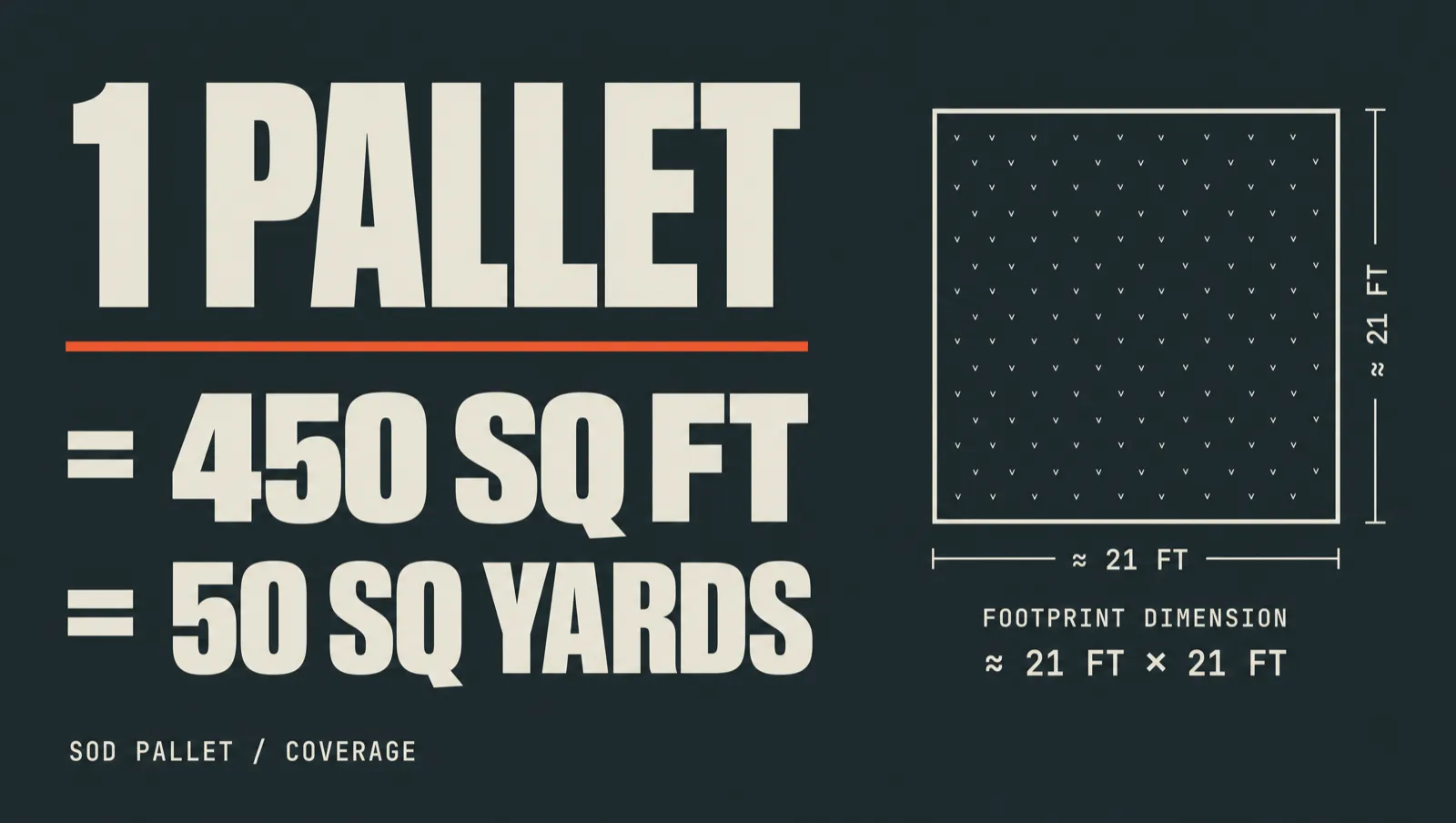
One pallet of sod covers 450 square feet. Measure the lawn area you actually want grass on (subtract beds, driveways, pools), divide by 450, and round up to the next whole pallet. We don't break pallets for delivery.
The math
Sod arrives stacked on a wooden pallet — usually 165-180 pieces of 16" × 24" cut sod, depending on the farm. Total coverage is 450 sq ft. Some farms cut bigger rolls; the 450 number is the standard for DFW sod yards, including ours.
Worked example. A 60 ft × 75 ft front + side yard is 4,500 sq ft. Subtract:
- Driveway: 20 × 60 = 1,200 sq ft
- Walkway: 100 sq ft
- Front beds: 200 sq ft
- House footprint already excluded
Lawn-to-be-sodded: 4,500 − 1,500 = 3,000 sq ft.
3,000 sq ft ÷ 450 = 6.67 pallets → order 7 pallets
Don't try to "stretch" pallets. A pallet doesn't get bigger when you cut it tighter; you just end up with strips that die in week two. The 450 number assumes normal seams.
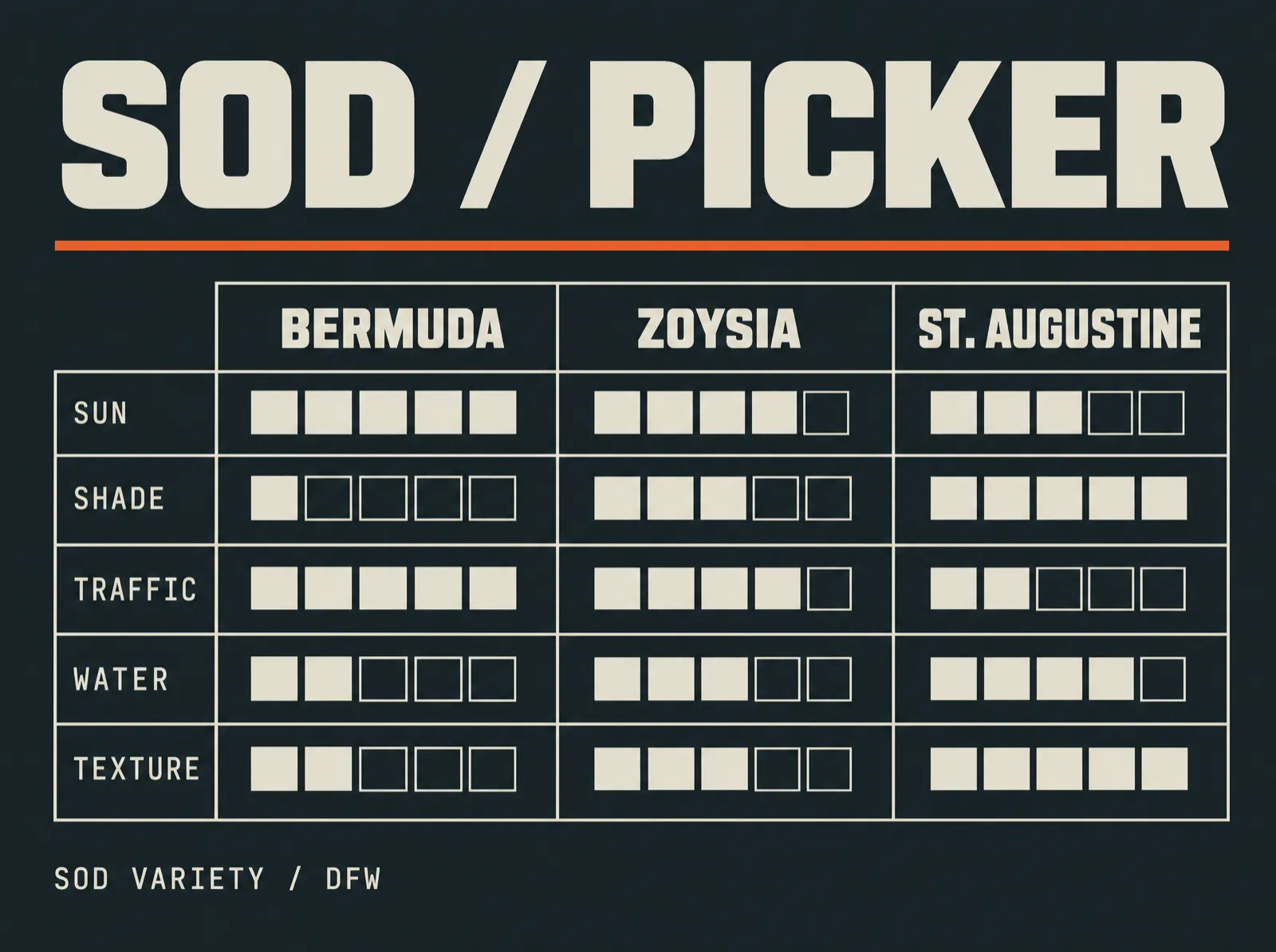
Bermuda vs St. Augustine vs Zoysia (DFW reality):
- Bermuda: full sun, drought-hardy, the default for most North Texas lawns. Tifway 419 is the standard; TifTuf is the drought-tolerant pick.
- St. Augustine (Raleigh, Palmetto): shade tolerant, needs more water, common under live oaks and post oaks.
- Zoysia (Palisades, Zorro): slow-growing, premium look, the priciest of the three. Live pallet prices are on each product page.
If you have a mixed-light yard, plan to sod two species — Bermuda for the sun side, St. Aug under the trees.
The shortcut: satellite measuring
Hand-measuring a curved lawn is a hassle. We built a satellite measuring tool that pulls up your house on aerial imagery — you click the corners of the lawn, including curving around beds and the driveway, and it returns square footage. Most homeowners get within 5% of a tape measurement in under two minutes.
Common mistakes
- Forgetting the topsoil base. New sod laid on bare DFW clay will struggle. Spread 2-3 inches of topsoil or compost-blended soil and rake smooth before the pallets arrive. Premium Soil Mix is our usual sod-prep soil. Sod laid on prepped soil roots in 10-14 days; sod laid on clay can take a month and you'll lose strips.
- Ordering sod before you have a watering plan. New sod needs water 2-3x/day for the first 10 days. If you don't have a sprinkler system or hose-end timer ready, push the install date.
- Measuring the lot, not the lawn. Subtract every bed, walkway, AC pad, and pool deck. People routinely over-order by 20% by forgetting the back bed.
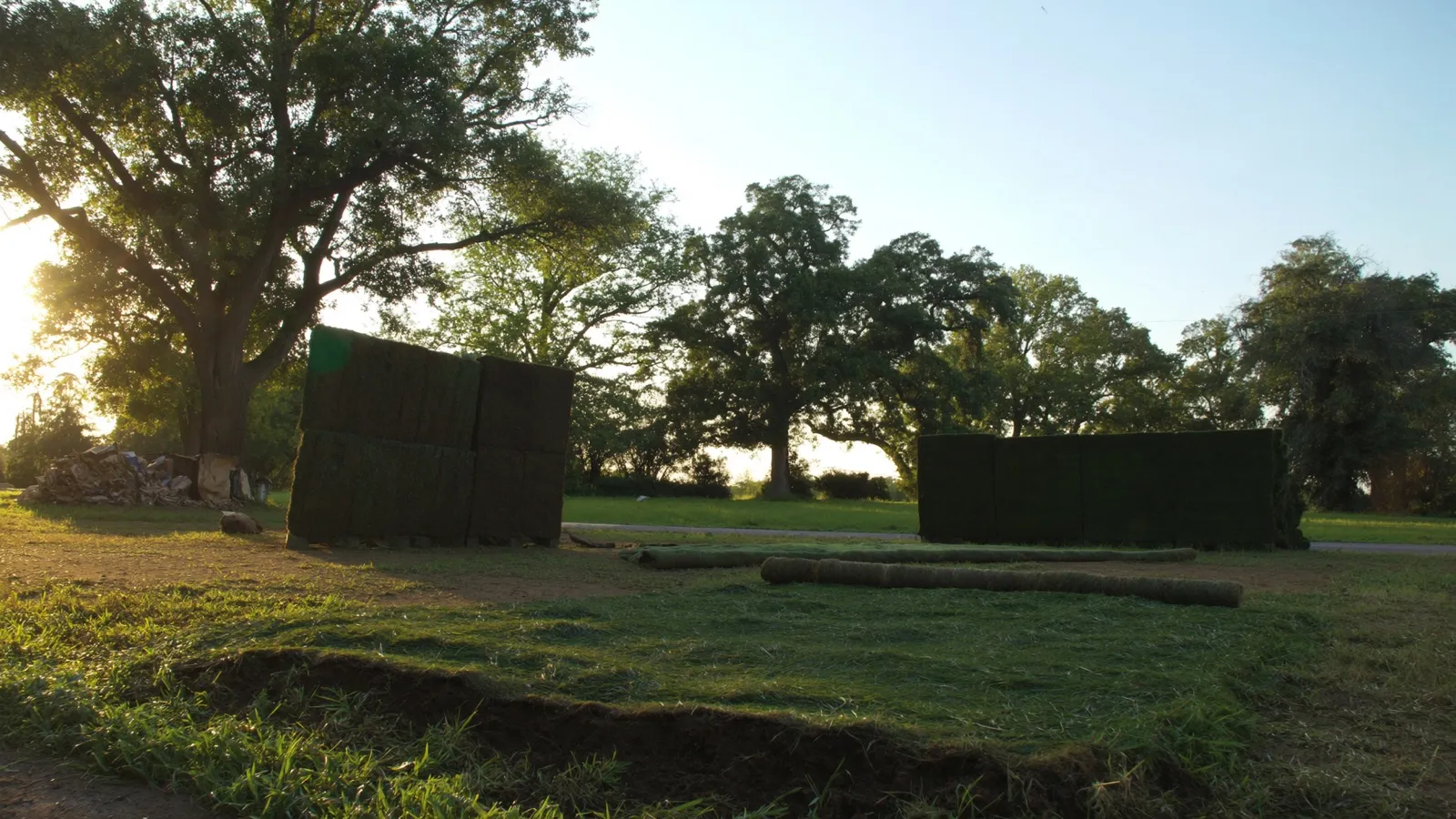
- Not planning the drop spot. A sod pallet weighs 2,500 to 3,000 lbs wet. We deliver it, so pick a spot on the driveway close to where you're laying, and keep it off soft ground and sprinkler lines.
What to do next
The fastest path: open the satellite measure tool, trace the lawn, and the page returns pallet count and a delivery quote. To see species, pricing, and current pallet stock, hit the sod materials page or jump straight to sod stock and prices. If you'd rather punch sq footage into a formula, the sod calculator does the divide-by-450 + round-up for you.
Also useful
- How much topsoil for a raised bed or yard — for the soil prep before sod arrives
- How much mulch do I need — if the beds are getting refreshed at the same time